Can I Buy Dumbbells with Hsa: How to Qualify and Save on Your Purchase
You may use your HSA funds to purchase dumbbells provided you have a medical necessity letter from a licensed healthcare provider. The letter should explain how dumbbells help treat a particular medical condition. Typically, obtaining this letter takes under 48 hours and allows you to save about 25-30% by using pre-tax HSA dollars.
Key Takeaways
- Get a letter of medical necessity (LMN) to qualify your dumbbell purchase for HSA reimbursement.
- Complete a brief online health assessment to receive the LMN within 24 to 48 hours.
- Use licensed services like Crates or Truemed for quick and easy LMN approval.
- Saving about 30% on your dumbbells occurs by using pre-tax HSA dollars versus post-tax income.
- Maintain your LMN yearly as it typically expires after 12 months.
- Pay attention to tax penalties: withdraw HSA funds for non-qualified expenses and you’ll owe income tax plus a 20% penalty if under 65.
Are Dumbbells Eligible for HSA Funds and When?
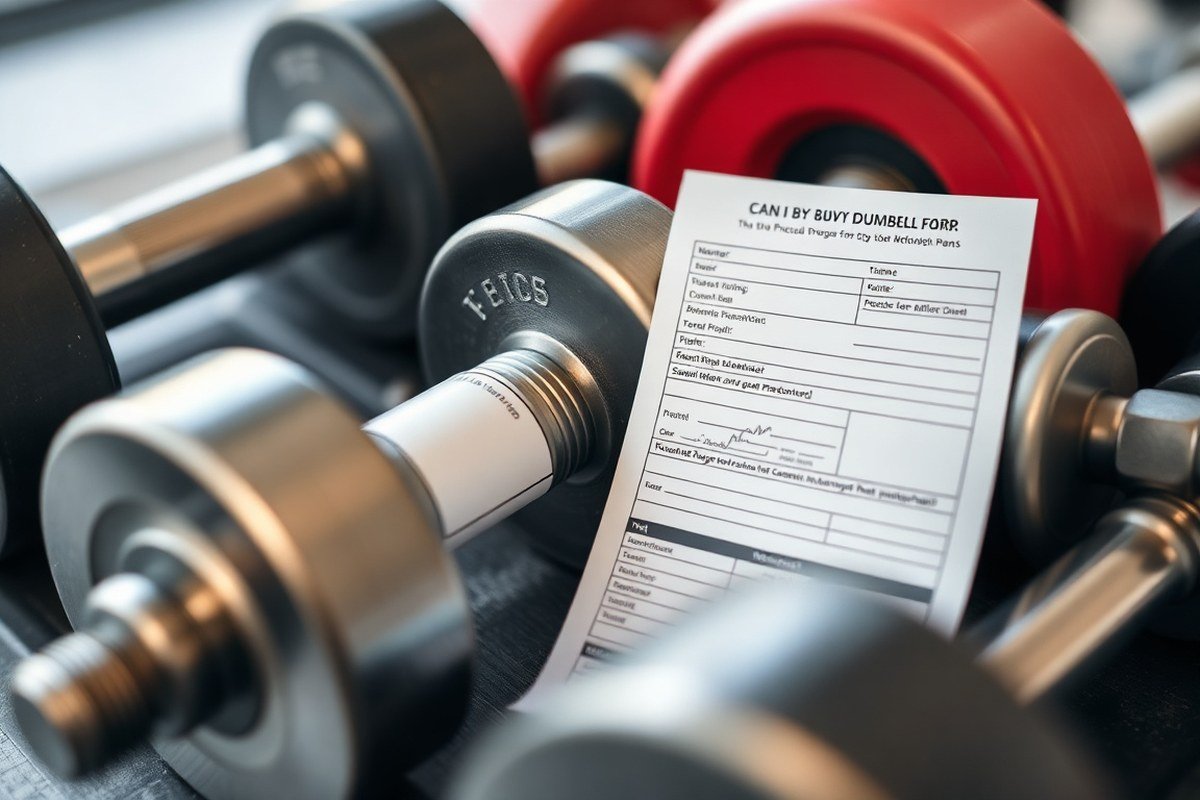
You can buy dumbbells with your HSA funds if they meet specific criteria set by the IRS. The key factor is whether the dumbbells are purchased for Medical necessity rather than general fitness or wellness. The IRS classifies most exercise equipment, including dumbbells, as general health expenses, which are not eligible for HSA reimbursement unless prescribed to treat or manage a diagnosed medical condition.
A Letter of Medical Necessity (LMN) from a licensed healthcare provider must confirm that dumbbells are required for your medical treatment. Typical qualifying conditions include chronic pain, obesity, heart disease, osteoporosis, diabetes, and muscle weakness. Without this letter, the IRS may classify the expense as non-qualified, which could lead to taxes or penalties if you use HSA funds to cover it.
IRS Publication 969 outlines that expenses paid from your HSA must be for medical care incurred after the account was established, and dumbbells must be directly linked to treating your health condition. Gym memberships or general fitness equipment purchases without medical justification are excluded. Using an LMN bridges this gap by confirming your dumbbells are not for general fitness but for addressing a specific health need. Here is a comparison of dumbbell eligibility under HSA rules:
| Without Letter of Medical Necessity | With Letter of Medical Necessity |
|---|---|
| Classified as a non-qualified expense | Eligible medical expense when prescribed |
| Purchase for general fitness or wellness | Prescribed for managing a diagnosed medical condition |
| Not reimbursable from HSA funds | Reimbursable or directly payable using HSA funds |
To use your HSA for dumbbells, ensure the LMN comes from a licensed healthcare professional and covers your medical condition and treatment plan. Submit this letter with your receipt when requesting reimbursement or use it to justify the purchase at checkout if the seller accepts HSAs. Making this distinction helps you stay within IRS rules and avoid unexpected costs or penalties.
How to Get a Letter of Medical Necessity (LMN) for Dumbbells
A Letter of Medical Necessity (LMN) is a written statement from your healthcare professional explaining why dumbbells are essential for your medical treatment. To get an LMN, you should meet with the doctor who handles your specific health problem, like arthritis or post-surgery recovery. Mention your plan to use HSA funds for purchasing dumbbells and request the letter to explicitly link the equipment to your care plan. The LMN must have a clear medical diagnosis and describe how dumbbells contribute to managing or improving your health issue.
Once you request the LMN, approval typically takes a few days to a couple of weeks, depending on your provider’s availability and documentation process. Some online HSA-approved fitness stores provide LMN consultations that can shorten wait times, often delivering the letter within 24 to 48 hours. These services generally charge a fee for the consultation, which varies but can be around $50 to $100.
To keep using your HSA funds for dumbbells, you must renew the LMN periodically, usually annually or as your provider recommends. This renewal confirms that your medical condition still requires the equipment. Maintaining up-to-date documentation avoids denied claims and ensures compliance with IRS rules. Save all records, including the LMN and purchase receipts.
A clear step-by-step approach includes: book a visit with your healthcare provider, request a dated, signed LMN linking dumbbells to a medical need, submit the letter to your HSA administrator if required, keep copies for your files, and renew the LMN as needed. Providing precise medical details in the letter, such as the diagnosis and expected benefits, improves the chance of approval. Avoid vague or unsupported requests since about 95% of dumbbell claims without an LMN are denied. Following these steps protects your eligibility and maximizes your HSA benefits.
Step-by-Step Guide to Buying Dumbbells with HSA Funds
To use your HSA for purchasing dumbbells, follow a specific process that ensures you comply with your plan’s rules. Only pay with your HSA card if you have a Letter of Medical Necessity (LMN) from a healthcare professional confirming the dumbbells are medically necessary for a diagnosed condition. Transactions lacking this proof might be declined or marked ineligible. Alternatively, you can pay with personal funds and request reimbursement from your HSA later.
Keep records like the detailed receipt showing the date, item description, and price. This documentation supports your claim and satisfies your HSA administrator’s requirements. Using your HSA card directly reduces out-of-pocket cash flow impacts and speeds up purchase completion. When reimbursement is necessary, the process often takes one to two weeks, depending on your plan’s processing time.
- Confirm eligibility of the dumbbells under your HSA plan with your provider and obtain an LMN from your healthcare professional if required.
- Shop for dumbbells online or in-store, ensuring the equipment fits the medical necessity criteria and is an approved item under your plan.
- Use your HSA debit card at checkout if you have the LMN and your plan allows direct payment for eligible expenses; otherwise, pay with your personal card.
- Keep the itemized receipt showing the product name, purchase date, and price paid; this will be essential for record-keeping and possible reimbursement.
- Submit a reimbursement request through your HSA provider’s website or app if you paid out-of-pocket; include the receipt and a copy of the LMN with your submission.
- Retain all documentation for your records, as audits can require verification of purchase and medical necessity, helping avoid tax penalties.
What to Expect: Savings, Risks, and Penalties Using HSA for Dumbbells
Using HSA funds to buy dumbbells offers significant tax savings because you’re spending money that was never taxed. Typically, this means saving about 25 to 30 percent of the purchase price, depending on your tax bracket. For example, on a $200 set of dumbbells, you could effectively reduce your cost by up to $60 when buying through an HSA. You pay with pre-tax dollars, so that money avoids federal income taxes and often state taxes too, making it a cheaper way to invest in your health if you qualify.
However, buying dumbbells without eligibility can cause problems. The IRS requires that expenses be qualified medical expenses. Dumbbells purchased for general fitness usually don’t qualify unless you have documentation, like a letter of medical necessity. Without that, you risk claim denial from your HSA provider. Your claim might be rejected, which means you could owe income tax on the withdrawn amount plus a 20% penalty. Using the same $200 example, you’d owe the $200 as taxable income and an additional $40 penalty, totaling $240, which is much more costly than paying out of pocket.
Using your HSA funds to buy dumbbells could lead to tax penalties and interest if audited. The best approach is to verify eligibility with your HSA plan before purchasing and to keep records proving medical necessity if applicable. When your claim is denied, request the exact reason from your provider and see if a medical necessity letter could help. This extra step helps protect you from unexpected tax bills and penalties while maintaining the tax advantage of using your HSA.
Common Mistakes and Alternatives When Dumbbells Are Not HSA Eligible
Many people think all fitness equipment qualifies for HSAs, but Exercise gear does not automatically qualify for HSA or FSA use. Claims for dumbbells often get denied if you don’t have a valid letter of medical necessity or other supporting documentation. Make sure your dumbbells are purchased from approved HSA/FSA vendors like Rogue Fitness or PowerBlock, and secure a correctly completed Letter of Medical Necessity (LMN) outlining the medical reason.
Some buyers confuse HSA and FSA rules. Both accounts require equipment to treat a specific condition to qualify, but FSAs sometimes have different plan restrictions or less flexibility based on your employer’s setup. Reviewing your plan documents or calling your administrator can clarify eligibility differences between accounts.
When your dumbbell claim gets denied, use the explanation of benefits to submit an appeal promptly. Include the LMN, receipts, and any relevant health provider statements explaining the medical use. A common decision rule to identify likely denials is confirming if the equipment is strictly for fitness rather than prescribed treatment. Fitness-only claims tend to be rejected.
When dumbbells do not qualify, consider Approved alternatives like adjustable kettlebells, weight plates, or barbells from verified brands. These types often have clearer medical approval and are recognized by many HSA plans. Some retailers also accept HSA/FSA cards directly at checkout for eligible products, which simplifies the verification process and reduces claim denials.
Step-by-Step Action Plan for Buying Dumbbells with HSA Funds
Follow this plan to confidently use your HSA or FSA funds to purchase dumbbells when they qualify as a medical expense.
- Before you buy: Confirm that your dumbbells are eligible by checking your HSA plan’s guidelines or IRS rules. Eligibility often requires a doctor’s recommendation for a specific condition.
- Day 1: Request a Letter of Medical Necessity (LMN) from your doctor detailing the reasons dumbbells are required for your therapy. Make sure the letter specifies your diagnosis along with the treatment approach.
- Day 3: Submit the LMN to your HSA administrator or keep it for your records if you plan to self-certify expenses during tax time. Confirm if pre-approval is required.
- Day 5: Shop for dumbbells that meet your prescribed use, keeping receipts and product information that show how they aid your health condition.
- Day 6: Use your HSA debit card or submit a claim with receipts and the LMN to reimburse yourself. Track your expenses carefully to avoid penalties.
- After 1 week: Review your HSA account to ensure the transaction is reflected properly and no issues came up. Reach out to your plan administrator if something seems wrong.
- After 1 month: Keep all related documentation for at least three years in case of IRS audit. Review your use of funds to stay within eligible limits for future purchases.
Frequently Asked Questions
Can I Use My HSA Card Directly to Buy Dumbbells Without a Doctor’s Note?
Your HSA card cannot be used to purchase dumbbells for general fitness unless you have a doctor’s letter stating it is medically necessary. A clear medical reason documented by your healthcare provider is required to qualify for this expense.
What Should I Do If My HSA Purchase of Dumbbells Is Denied?
Contact your HSA provider for clarification and submit a letter of medical necessity if possible. Keep all receipts and documents to support your claim for reimbursement.
Are Adjustable Dumbbells Treated Differently by HSAs Than Fixed-Weight Dumbbells?
No, the eligibility depends on having a medical necessity letter, not the type of dumbbell. Both adjustable and fixed dumbbells require proper documentation to qualify.
Can Reimbursement Be Claimed If I Pay for Dumbbells Out of Pocket?
Yes, you can pay out of pocket and submit proof of purchase along with a medical necessity letter for HSA reimbursement. This option gives you more control over documentation.
Does Using Dumbbells for Physical Therapy Affect HSA Eligibility?
Dumbbells prescribed as part of physical therapy are HSA-eligible with proper documentation. The therapist or healthcare provider must specify the need in the letter of medical necessity.
Final Thoughts
Using HSA funds to buy dumbbells can be a smart way to support your prescribed health needs if done carefully. Begin by talking to your healthcare provider about medical necessity and get the right documentation. Taking these clear steps helps avoid penalties and maximizes your HSA benefits for effective fitness and therapy.