Are Vibration Plates HSA Eligible? Complete Guide to Qualification and Savings
Are vibration plates HSA eligible depends on medical necessity. They qualify for HSA or FSA reimbursement only if prescribed by a licensed healthcare provider for a specific health condition. Without a Letter of Medical Necessity linking the vibration plate to treatment, it’s considered general fitness equipment and won’t qualify. Start by consulting your healthcare provider to get a Letter of Medical Necessity, which must be renewed annually to keep your purchase eligible for HSA or FSA funds.
Key Takeaways
- A Letter of Medical Necessity from a licensed provider is required for a vibration plate to be HSA/FSA eligible.
- IRS Publication 502 covers devices prescribed for diagnosis, treatment, mitigation, or prevention of disease.
- Vibration plates used for specific medical conditions like obesity or lymphedema may qualify when documented properly.
- The Letter of Medical Necessity must be updated every 12 months to maintain eligibility.
- You can save close to 30% on taxes by purchasing a vibration plate with HSA or FSA funds.
- Consult your provider before purchase to ensure your vibration plate meets eligibility requirements.
Are Vibration Plates Eligible for HSA or FSA Reimbursement?
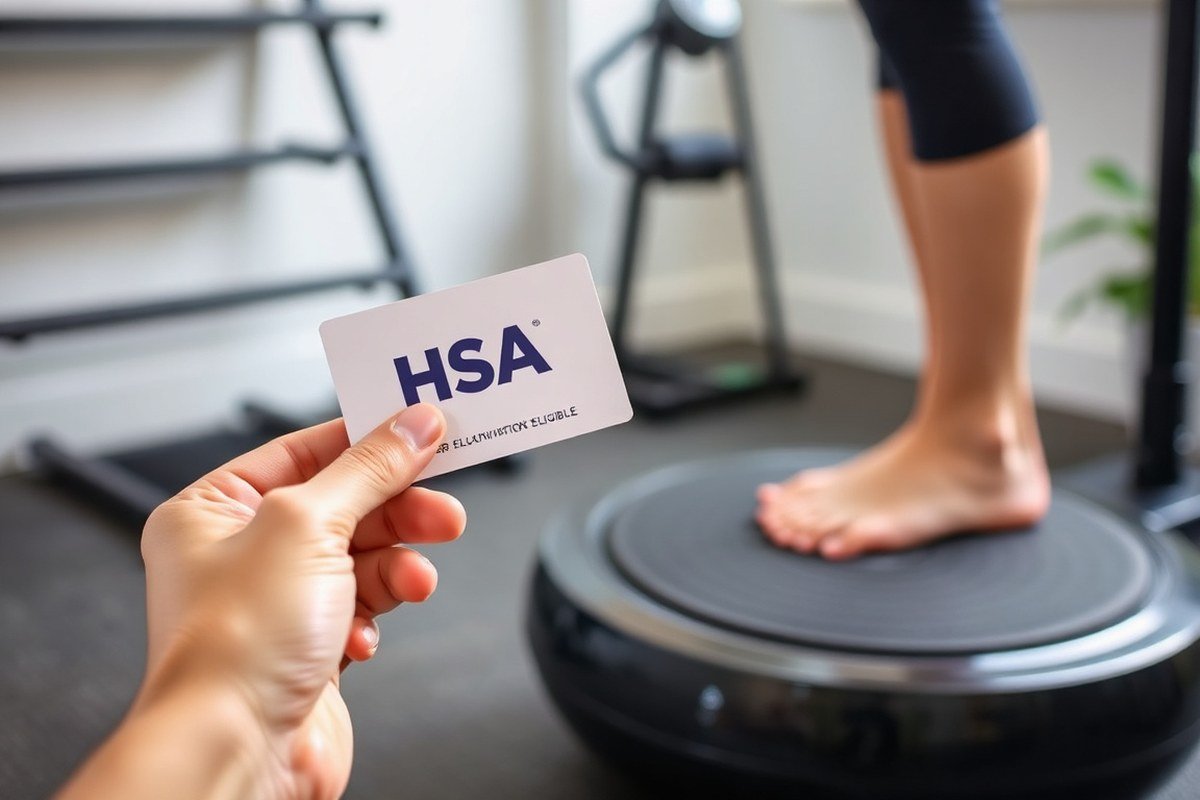
Vibration plates are generally considered fitness equipment by the IRS and do not qualify for purchase with HSA or FSA funds without further documentation. The IRS classifies these devices as tools for general wellness rather than medical treatment, which means you cannot simply buy one and use your HSA or FSA card as you would with prescription medications or approved medical devices.
To have your vibration plate eligible for reimbursement through an HSA or FSA, obtain a Letter of Medical Necessity (LMN) from a licensed healthcare provider. This document must state that the vibration plate is prescribed for managing a particular medical condition, consistent with IRS Publication 502 guidelines. That publication specifies that qualified medical expenses include costs for the “diagnosis, cure, mitigation, treatment, or prevention of disease.”
Without an LMN, a vibration plate is treated as fitness equipment and will not be approved for reimbursement through your HSA or FSA. The process typically involves consulting your healthcare provider, explaining why the vibration plate is necessary for your condition, and requesting a written letter to document this necessity. Some popular brands like Power Plate, Lifepro, and Merach have product models that qualify for reimbursement when an LMN accompanies the purchase.
You can purchase the vibration plate from any retailer, but to access HSA or FSA funds, submit your LMN and proof of purchase to your plan administrator for approval. Costs of these devices vary, but the investment can be significant, often ranging from several hundred to a few thousand dollars. Having official documentation ensures that your expense meets IRS rules, helping you avoid denied claims and ensure compliance with tax regulations.
Medical Conditions That Qualify for a Vibration Plate Letter of Medical Necessity

The medical conditions that typically support obtaining a Letter of Medical Necessity (LMN) for vibration plate use include those involving circulation issues, muscle stimulation needs, and metabolic challenges. Vibration plates can be prescribed to help manage Lymphedema, obesity, and peripheral neuropathy by improving blood flow, stimulating muscles, and aiding recovery or mobility. Your healthcare provider will assess whether the device fits your specific medical condition and document why it is essential.
For example, in cases of Lymphedema, a vibration plate promotes circulation and lymphatic drainage, which can reduce swelling. Those with Obesity or metabolic disorders may benefit from vibration therapy combined with diet and exercise because it helps activate muscles and increase calorie burn, supporting weight management efforts. Peripheral neuropathy patients often use vibration plates to improve nerve stimulation and improve motor function.
The LMN must contain precise medical details outlining the condition you manage, why the vibration plate is a important part of your treatment, and which features of the device support your needs. Obtaining an LMN often involves completing a brief online health assessment, lasting 2 to 3 minutes, followed by a licensed provider’s review. Services like Truemed or Flex specialize in issuing these letters when your doctor supports the prescribed therapy.
Comparing vibration plates for your condition involves factors such as motion type, side-alternating or vertical vibration, frequency, and acceleration levels, as well as support features like handrails for stability. While the brand does not guarantee eligibility, the LMN must clearly justify use for your condition. Devices like the Aura Wave Fully Body Circulation Plate focus on circulation improvements and are HSA eligible with the proper documentation.
| Device Type | Primary Benefit |
|---|---|
| Vibration Plate | Muscle stimulation, circulation |
| TENS Unit | Pain relief, nerve stimulation |
| CPM Machine | Joint mobility, post-surgery recovery |
| Blood Pressure Monitor | Cardiovascular health tracking |
How to Obtain a Letter of Medical Necessity for a Vibration Plate

Obtaining a Letter of Medical Necessity (LMN) for a vibration plate starts with a consultation with your healthcare provider. You’ll need to discuss your specific medical condition and explain why a vibration plate is essential for your treatment or therapy. Your provider must document this rationale clearly in the LMN, linking your condition to the use of the device. The letter should specify that the vibration plate is medically necessary and not just for general fitness.
If your provider agrees, they will create the LMN, which typically outlines your diagnosis, treatment plan, and the need for the vibration plate. The letter remains valid for 12 months, so you’ll have to renew it annually to keep using your HSA funds for this purchase. The entire process from consultation to receiving the LMN can take anywhere from a few days up to two weeks, depending on your provider’s availability and office procedures.
In cases where your healthcare provider refuses to write an LMN, you can consider a second opinion or seek a specialist familiar with your condition who understands the therapeutic benefits of vibration plates. Some online platforms also offer assessments and can connect you with licensed providers who can evaluate your needs and provide a valid LMN remotely, which might speed up the process.
The LMN must be thorough, including proof of your medical condition and a clear explanation of how the vibration plate complements your treatment. Without this documentation, HSA or FSA funds will likely be rejected for reimbursement. The cost for obtaining an LMN varies, but it can be included in your consultation fee or charged separately, often between $50 and $150 depending on the provider.
How to Use Your HSA or FSA Funds to Buy a Vibration Plate
Paying for a vibration plate using your HSA or FSA debit card is simple when you have a Letter of Medical Necessity (LMN). Websites like powerplate.com offer payment options such as “TrueMed – Pay with HSA/FSA” or “Flex – Pay with HSA/FSA,” designed for these accounts. This method helps you avoid out-of-pocket upfront costs and lets you save roughly 30% by using your tax-advantaged funds.
Without your HSA or FSA card, a regular credit card can cover the purchase, and you can request reimbursement afterward by submitting a claim. For FSA, submit your receipt and LMN to your employer’s benefits administrator following their specific instructions. For HSA, you can reimburse yourself by keeping receipts and medical documentation as proof of an eligible expense. Retain multiple copies of all documents to avoid issues during this process.
Before buying any brand of vibration plate using HSA or FSA money, confirm the device qualifies as an eligible medical expense under IRS rules, as these funds do not cover all fitness equipment. Make sure your LMN clearly states the medical condition it treats to support eligibility. Check with your benefits provider about specific retailer acceptance and reimbursement procedures.
A practical checklist includes having your LMN ready, confirming your card supports HSA/FSA payments, selecting a retailer that accepts these payments, and gathering receipts and documentation for reimbursement if needed. Incorrect or missing medical documentation can lead to rejected claims and unexpected personal costs. Make the purchase only after reviewing your account balance and the plan’s eligible expenses list to avoid surprises.
Tax Savings and Documentation Needed for HSA Reimbursement
Using HSA funds to purchase a vibration plate can yield significant tax savings. Since contributions to your Health Savings Account come from pre-tax dollars, you avoid federal income tax, Social Security, and Medicare taxes on that money. For example, if a vibration plate costs $300 and your combined tax rate is around 30%, you effectively save about $90 in taxes. That means your after-tax cost is closer to $210. This tax benefit lowers the real cost of the vibration plate when bought with HSA money versus out-of-pocket.
The IRS requires careful recordkeeping to support any HSA or FSA claims. According to IRS Publication 969, eligible expenses must occur after your HSA account is established. You need to keep your receipts or invoices that show the date of purchase, description of the vibration plate, and the amount paid. Also maintain a copy of any Letter of Medical Necessity if your vibration plate is prescribed for specific medical conditions. This documentation is critical in case the IRS requests proof that the expense was qualified.
Common pitfalls include submitting claims without proper receipts, mixing expenses from before your HSA was active, or missing FSA plan-year deadlines. You should organize your medical expense paperwork in one folder labeled by year, sorted by date. Digital copies with searchable filenames (“VibrationPlate_Receipt_2024-06”) can simplify retrieval. Keep track of usage recommendations too, like using the vibration plate three times weekly for 10 to 15 minutes, as this supports the medical benefit claim if needed.
For example, after buying your plate on June 1st and receiving your receipt, scan the document immediately. Pair it with your Letter of Medical Necessity and put both in your HSA folder. When filing your Form 8889 with your tax return, use the total amount spent from receipts dated after account opening. If you file an FSA claim, submit the receipt by that plan’s deadline, often within 90 days after the plan year ends.
Effective Vibration Plate Use for Medical Benefits and Therapy
Using a vibration plate effectively for medical benefits generally means starting with short sessions, around 5 to 10 minutes, two to three times per week. This frequency allows your muscles and circulation to adjust while minimizing the risk of overuse. Session duration may increase gradually as your body adapts, but most therapeutic routines keep sessions under 20 minutes. The key to good results lies in consistency, low-to-moderate intensity settings, and proper posture during use. Consulting your healthcare provider before starting ensures safe integration with your specific condition and overall therapy plan.
The effects you can expect include improved muscle stimulation and improve blood flow, which supports recovery and reduces stiffness. Unlike a TENS unit that directly targets pain, vibration plates encourage general circulation and muscle activation, helping with strength and balance over time. Results depend on factors like session regularity, vibration amplitude, and underlying health issues. Users with limited mobility or elderly individuals should start at the lowest settings and increase slowly, as advised by a doctor.
Compared to other medical devices eligible for HSA reimbursement, vibration plates require more time per session but offer broad benefits involving muscle activity and circulation. A typical TENS session might last 20 minutes targeting pain, while vibration therapy focuses on multiple wellness aspects such as bone density support and mobility enhancement through mechanical stimulation. Costs vary widely, often ranging from $100 to over $1,000, depending on features and quality, so reviewing both your budget and therapy goals is important before purchase.
Your Step-by-Step Plan to Buy a Vibration Plate with HSA Funds
Follow these steps to make sure your vibration plate purchase qualifies for HSA reimbursement and to maximize your tax savings.
- Before you buy: Confirm with your healthcare provider that a vibration plate is medically necessary for your condition. This ensures eligibility and sets the stage for documentation.
- Within 1 week: Request a Letter of Medical Necessity (LMN) from your doctor specifying why you need the vibration plate. You’ll need this to submit for HSA reimbursement.
- Within 2 weeks: Review HSA or FSA plan rules and check with your administrator about vibration plate eligibility and required documentation.
- When ready to purchase: Choose a vibration plate that fits your medical and therapy needs, keeping receipts and the LMN handy for your records.
- After purchase: Submit your claim for reimbursement along with your LMN and receipt. Confirm approval or follow up as needed.
- First month of use: Use the vibration plate as directed by your healthcare provider to ensure it supports your treatment goals.
- Ongoing: Keep all related documentation in case of IRS audits or plan reviews to protect your HSA or FSA funds.
Frequently Asked Questions
Are Vibration Plates Automatically Eligible for HSA Reimbursement?
No, vibration plates require a Letter of Medical Necessity from a healthcare provider for HSA eligibility. Without this, they are treated as fitness equipment and not reimbursable under IRS rules.
Can Over-The-Counter Vibration Plates Be Claimed on an HSA?
Over-the-counter vibration plates need a medical prescription and an LMN to qualify for HSA claims, otherwise they are not eligible.
Does Every Brand of Vibration Plate Qualify for HSA with a Medical Necessity Letter?
Yes, vibration plates from every popular brand like Lifepro, Power Plate, and Merach are HSA eligible if prescribed with an LMN for a qualifying medical condition.
Is There a Difference in HSA Eligibility Between Portable and Larger Vibration Plates?
No, both portable and larger whole-body vibration plates are HSA eligible with proper medical documentation regardless of their size or portability.
Can I Use My HSA Funds for Vibration Plate Accessories or Just the Machine?
Only the vibration plate machine prescribed with a Letter of Medical Necessity is eligible; accessories usually do not qualify for HSA reimbursement.
The Bottom Line
Vibration plates can be HSA-eligible when prescribed for medical reasons and documented correctly. Start by getting a detailed Letter of Medical Necessity from your provider to make your purchase reimbursable. After securing proper documentation, use your HSA funds to buy a device that supports your therapy and keeps your expenses manageable.