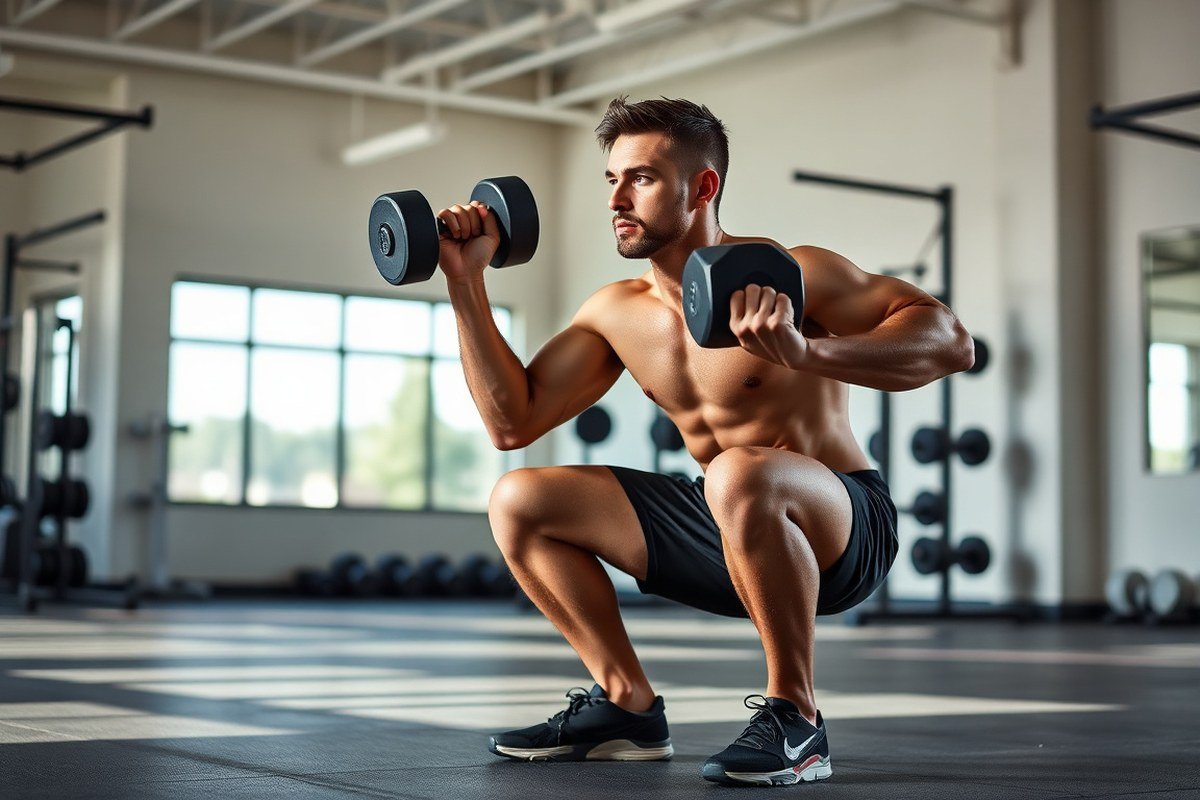
Are Dumbbell Squats Effective? A Complete Guide to Benefits and Best Practices
Are dumbbell squats effective for building strength and muscle? Yes, they are a practical, versatile exercise that targets multiple lower-body muscles while improving balance and stability. Starting with lighter weights and focusing on form helps lay a stable foundation for progress. Dumbbell squats also support functional fitness by mimicking real-life movements, making them a useful choice for all fitness levels.
Key Takeaways
- Dumbbell squats target the quadriceps, hamstrings, glutes, and core muscles simultaneously.
- Start with a manageable weight and increase by about 10% as you gain strength to safely progress.
- Perform dumbbell squats 2, 3 times per week, allowing at least 48 hours of recovery between sessions.
- For muscle mass and strength, aim for 8, 10 reps over 4, 5 sets with heavier dumbbells.
- Using a bench or small plates under your heels can improve squat depth and form if flexibility is limited.
- Rotating squat variations every 4, 6 weeks helps prevent overuse injuries and encourages continued progression.
Are Dumbbell Squats Effective for Muscle and Strength?
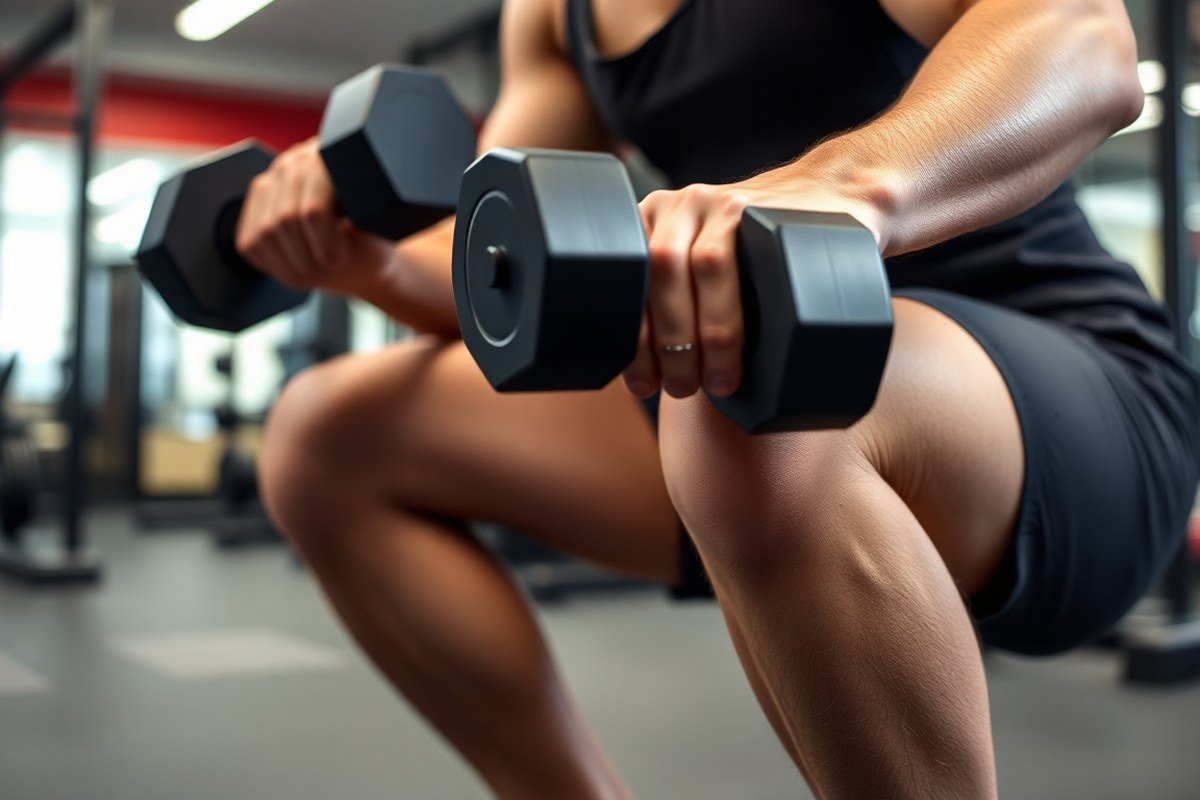
Dumbbell squats are effective for building muscle and strength, especially in your lower body. They target your quads, glutes, and core in a way that tends to be safer for many lifters compared to barbell squats. You can work with a wide range of weights and grips, allowing you to adjust intensity and movement for your fitness level. When you push your sets close to muscle failure, dumbbell squats can produce noticeable strength gains and muscle size increases similar to barbell squats.
A Comparison to barbell squats highlights some key differences. Barbell squats are typically better for lifting heavier loads, which helps experienced lifters and powerlifters maximize muscle size and raw strength. However, barbell squats require a squat rack, proper technique, and often more coaching to perform safely. Dumbbell squats, on the other hand, are easier to set up, more accessible for beginners, and reduce injury risk because the weights are lighter and more manageable.
| Factor | Dumbbell Squats | Barbell Squats |
|---|---|---|
| Muscle Activation | High, particularly quads and core | Very high, total lower body |
| Weight Load | Moderate, limited by grip strength | High, allows heavy lifting |
| Accessibility | High, no rack needed | Low, rack and spotter recommended |
| Risk of Injury | Lower risk with proper form | Higher risk with poor form or heavy load |
| Best For | Beginner to intermediate, general strength | Advanced, maximal muscle and strength gains |
Good results with dumbbell squats show up as stronger legs and improved squat depth, plus increased muscle size over weeks of consistent training. Progress depends on raising dumbbell weight incrementally and increasing reps to near failure safely. You can also try dumbbell front squats or sumo squats for variation and added core challenge. Avoid rushing to heavier weights before mastering form, as this risks injury and stalls gains.
Which Muscles Do Dumbbell Squats Target?
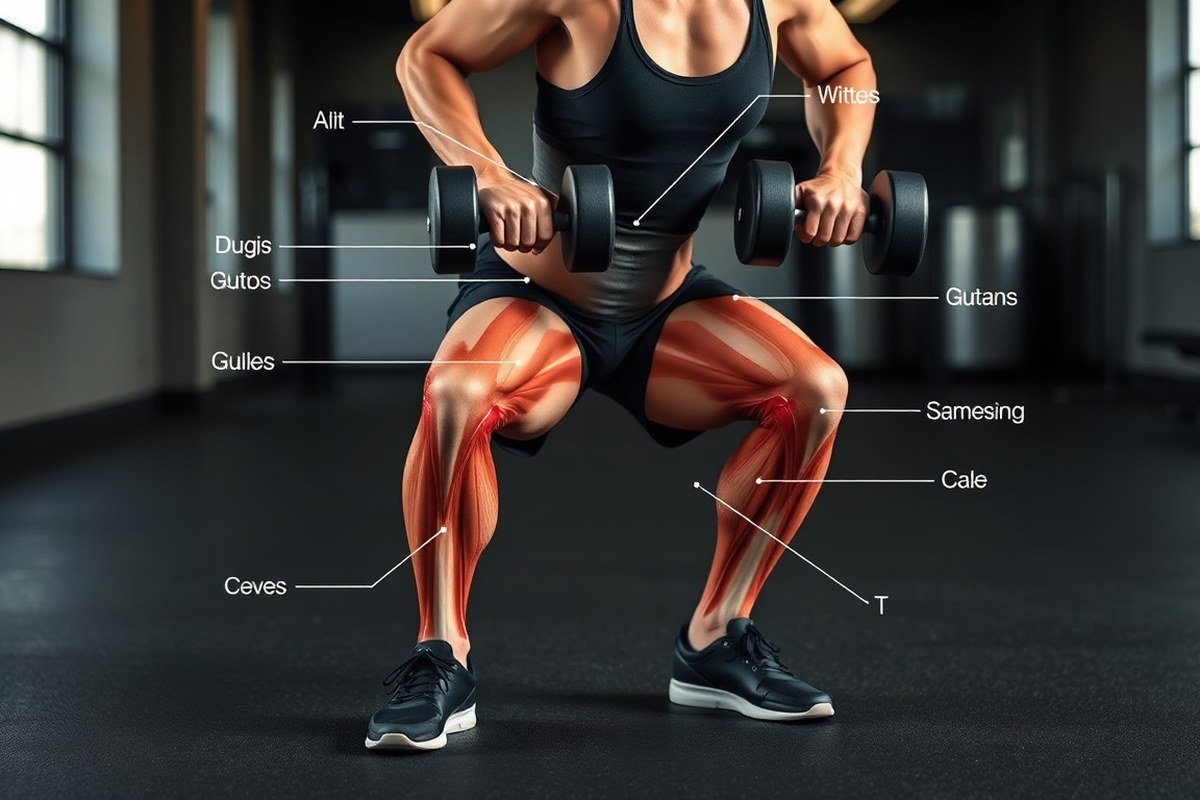
Dumbbell squats primarily target the quadriceps, the group of four muscles on the front of your thighs. These muscles contract to straighten your knees as you rise from the squat position. At the same time, the gluteus maximus, the largest muscle in your buttocks, activates strongly to extend your hips and power your upward movement. The hamstrings on the back of your thighs help by assisting hip extension and stabilizing your knees throughout the squat. Calf muscles, especially the gastrocnemius and soleus, engage to maintain ankle stability and balance during the movement.
Because dumbbell squats are a compound exercise, several Secondary muscles also get involved. The hip flexors support controlled descent and assist hip and thigh movement. Abductor muscles on the outer thighs work to prevent your knees from caving inward, improving joint stability. These muscles ensure proper alignment and reduce injury risk.
Your core muscles play a important stabilizing role during dumbbell squats. The abdominal muscles, lower back, and obliques contract isometrically to keep your torso upright and protect your lumbar spine from unwanted motion. Holding dumbbells adds load that demands greater core engagement to maintain balance, which improves core strength over time.
Activation follows a natural pattern as you lower into the squat: the quads lengthen under tension (eccentric contraction), while the hamstrings, glutes, and calves stabilize. On rising, these muscles switch to concentric contraction, generating force to lift your body and the weights. This coordinated muscle action helps develop functional strength across multiple joints. Playing close attention to form ensures that each muscle group activates efficiently, reducing unnecessary strain or compensation from weaker areas.
How to Perform Dumbbell Squats with Proper Form
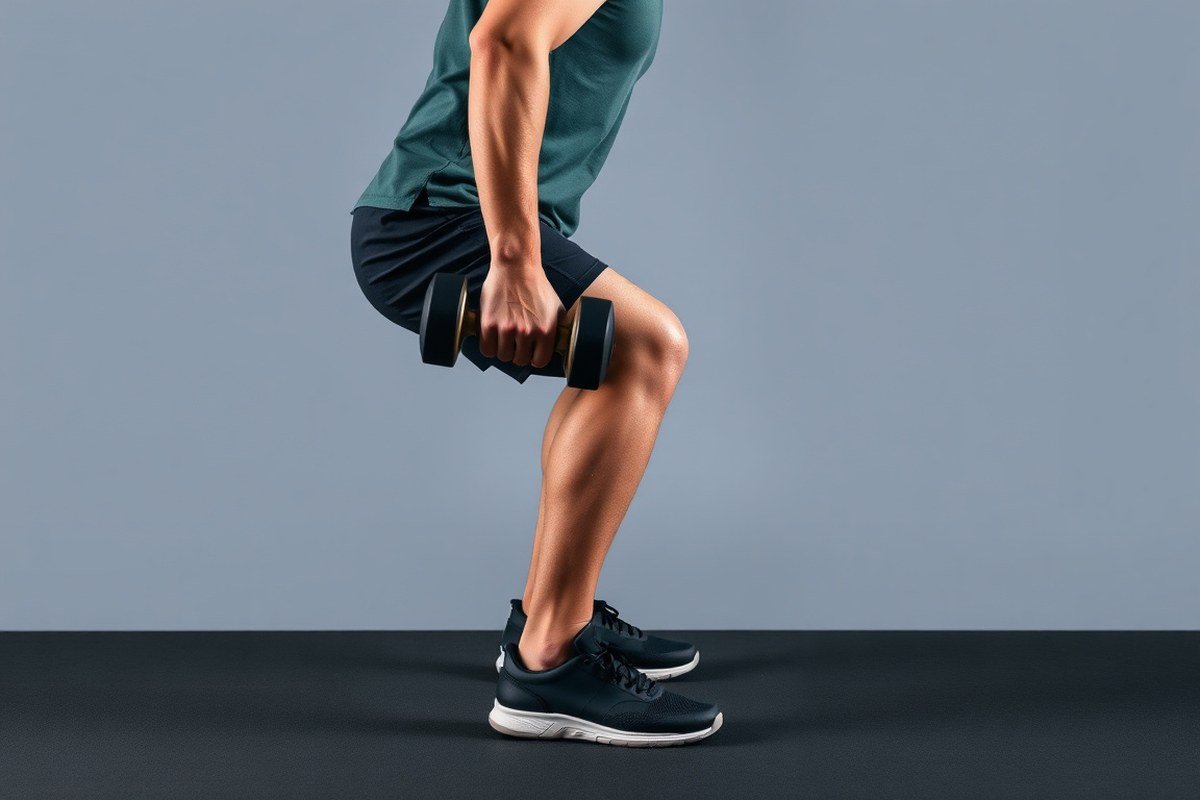
Performing dumbbell squats with Correct form is important to protecting your knees and lower back while maximizing muscle activation. Positioning your feet shoulder-width apart with toes pointing forward or slightly outward helps create a stable base. Maintaining a straight back and bracing your core ensures proper alignment and reduces injury risk. Controlled motion with slow descent and ascent improves stability and engages muscles effectively.
- Position your feet about shoulder-width apart, with toes facing forward or angled slightly outward. Grip a dumbbell in each hand and let them hang by your sides or lift them to rest on your shoulders.
- Engage your core by bracing your abdominal muscles to support your spine throughout the movement.
- Initiate the squat by bending at the hips and knees simultaneously, lowering your body slowly and with control.
- Keep your back straight, chest up, and shoulders back to avoid rounding or leaning forward.
- Align your knees so they track directly over your toes, avoiding inward collapse or excessive forward movement past the toes.
- Descend until your hips are below your knees, reaching proper squat depth for full muscle activation.
- Exhale and drive through your heels to stand back up, fully extending your hips and knees.
- Inhale on the way down, maintaining steady breathing to support core stability and movement control.
How to Progress Safely: Weight, Reps, and Frequency
Choose a dumbbell weight that lets you perform 10 to 15 reps with good form without struggling or losing control. For beginners, that might mean starting with 10 to 15 pounds per dumbbell. This ensures you develop proper technique before adding more resistance. As you become stronger and confident in your form, increase the weight by about 10% each time. For example, if you start at 15 pounds, the next step would be around 16.5 pounds. Gradual weight increases reduce injury risk and allow your muscles to adapt effectively.
Set a target of 3 to 4 sets per session. Performing dumbbell squats 2 to 3 times per week gives your muscles enough time to recover and grow stronger. Avoid squatting daily because muscles need rest to repair. Focus on quality reps over quantity; only raise the weight or reps when you can complete all your sets with proper form at a challenging effort.
A simple progression template would be: Start with 3 sets of 12 reps at a manageable weight. When 12 reps feel easier, add 1 to 2 pounds per dumbbell or increase reps to 15 before adding more weight. Here’s an example timeline: Weeks 1-2, 15 pounds, 3 sets of 12; Weeks 3-4, 17 pounds, 3 sets of 12; Weeks 5-6, 17 pounds, 3 sets of 15; then Weeks 7-8, 19 pounds, 3 sets of 12. This gradual approach helps you avoid plateaus and injury.
Grip strength can limit how much weight you can handle, so consider equipment like lifting straps or a weightlifting belt for added support, especially as weights get heavier. Keep in mind that dumbbell squats let you practice solid technique with lighter weights compared to barbell squats. This makes them ideal for learning and building endurance before progressing to heavier loads or more complex variations.
Common Dumbbell Squat Mistakes and How to Fix Them
A few common mistakes often reduce the effectiveness of dumbbell squats and increase injury risk. One is knee valgus, where the knees cave inward during the squat. This usually happens because of weak glutes and poor knee tracking. Fix this by consciously pushing your knees slightly outward to align with your toes as you squat. Strengthening glutes with targeted exercises also helps maintain better control.
Leaning forward excessively is another frequent issue. It places unnecessary strain on the lower back and stems from poor ankle mobility or weak core bracing. To correct forward lean, practice maintaining a tall chest and engage your core muscles throughout the movement. Struggling to keep your heels flat during squats? Try placing small 5-pound plates under your heels or wearing squat shoes designed to boost ankle mobility and balance.
Squatting too shallow or dropping too low can cause poor form. Work on reaching a depth where your thighs are about parallel to the floor while keeping a neutral spine and stable knees. A weak core often leads to a rounded back, so brace your midsection firmly like you expect a strong push to maintain control.
- Knees caving in: Push knees out to track over toes, strengthen glutes.
- Forward lean: Keep chest proud, brace core, use heels raised slightly if needed.
- Rounded back: Engage core muscles, avoid excessive depth beyond control.
- Shallow squats: Aim for hips parallel, don’t rush the descent.
- Uncontrolled movements: Move with control, pause briefly at the bottom for stability.
- Grip too tight: Hold dumbbells firmly but avoid tension affecting posture.
Regular verbal cues like “chest proud,” “knees track toes,” and “stand tall” help maintain proper form during each repetition. Slow controlled movements ensure muscle engagement and reduce injury risk. Lighter weights can help you refine your technique if problems continue. Getting help from a fitness professional may also pinpoint your weak spots for better progress. Proper form takes attention but pays off in safer and more effective training.
Variations and Modifications for Dumbbell Squats
The main Dumbbell squat variations include the conventional dumbbell squat, goblet squat, sumo squat, and overhead dumbbell squat. These variations target similar muscle groups but differ based on grip, stance, and dumbbell placement, which affect the muscles emphasized and the difficulty level. Starting with the goblet or conventional dumbbell squat is best for beginners or those focusing on overall lower-body strength. These versions allow control over depth and posture while minimizing spinal compression, making them easier to learn and safer for those with limited mobility or past injuries.
The goblet squat has you hold a dumbbell vertically in front of your chest with both hands. This position helps maintain an upright torso, improving balance, and is useful for beginners and mobility work. Use it for developing proper squat form or when you want a beginner-friendly option. The sumo dumbbell squat differs by having a wider stance with toes pointed out and a single dumbbell held between your legs. This variation shifts emphasis toward the inner thighs and hips and suits those wanting to target different lower-body muscles or improve hip mobility. Holding the dumbbell in different positions, such as arms extended or front-racked, can adjust the difficulty and core engagement.
Overhead dumbbell squats require pressing the weight above your head throughout the movement. This variation increases upper-body demand and challenges shoulder stability and core strength, making it more advanced. Use it when your goals include improving overall body control and coordination rather than just leg strength. Modifications for limited mobility or injury include reducing range of motion or performing box or chair-supported dumbbell squats to limit depth and reduce strain on knees or hips.
Tips for applying variations: Beginners should start with goblet or conventional dumbbell squats for form and strength foundation. Use sumo squats to work on hip flexibility and inner thigh focus, especially if you experience tight hips during regular squats. Choose overhead dumbbell squats if you have strong shoulders and want to increase core and shoulder stability. If you have mobility issues or injury concerns, reduce the squat depth, use lighter dumbbells, or support your weight by squatting to a box or bench to avoid unnecessary joint stress.
Integrating Dumbbell Squats into Your Workout Routine
Dumbbell squats can fit into your workout routine two to three times per week, allowing enough time for muscle recovery while promoting strength and growth. A balanced template might include dumbbell squats on Monday and Thursday, paired with complementary lower body exercises like deadlifts or lunges on other days. This approach targets your quads, glutes, and hamstrings from different angles, helping prevent overuse and imbalances.
Focus on alternating dumbbell squats with other movements that use different muscle groups or training stimuli. For example, you might perform dumbbell squats followed by Romanian deadlifts to work on both the front and back of your legs. This method ensures a complete lower body workout without overloading any single muscle or joint.
When considering exercise selection, use this decision rule: Stick with dumbbell squats until you can comfortably handle weights above 50 pounds per dumbbell with solid form and controlled depth. At that point, transitioning to barbell squats may provide more efficient strength gains and allow for heavier loads. Barbell squats demand better shoulder mobility and core stability, so only make the switch once you’re confident in those areas.
A practical four-week progression example looks like this: start with 3 sets of 8 reps using a moderate dumbbell weight on week 1; increase to 4 sets of 8 reps on week 2; add weight or increase reps to 10 per set by week 3; and aim for 4 sets of 10 reps or heavier dumbbells by week 4. Tracking performance this way balances workload and recovery, helping avoid plateaus or injury risk.
For beginners or those with limited equipment, dumbbell squats remain an effective lower body exercise that strengthens your core and legs without the complexity and spinal load of barbell squats. Incorporate variations such as goblet squats or sumo dumbbell squats to keep your workouts engaging while addressing mobility and muscle endurance progressively.
Step-by-Step Action Plan to Make Dumbbell Squats Work for You
Follow these steps to use dumbbell squats effectively in your fitness routine and see strength and muscle gains.
- Before you start: Choose a dumbbell weight that challenges you but allows for good form; test by doing 8 to 12 reps without losing posture.
- Day 1: Perform 3 sets of 10 dumbbell squats focusing on form; stop if your knees collapse or back rounds.
- Week 1: Add dumbbell squats twice this week, spacing sessions by 48 hours to allow muscle recovery.
- After 2 weeks: Increase reps to 12 per set or add one more set if your form feels solid and effort less taxing.
- Week 3: Gradually increase dumbbell weight by 5 pounds if completing all reps with ease and correct posture.
- Week 4 and beyond: Incorporate dumbbell squat variations such as goblet or split squats to target muscles differently and prevent plateaus.
- Ongoing: Track your progress by recording weights, sets, and reps to adjust load and volume safely.
Frequently Asked Questions
Are Dumbbell Squats Effective for Improving Balance?
Yes, dumbbell squats engage your core and lower-body muscles, which helps improve overall balance and stability during daily activities and sports.
Can Dumbbell Squats Help Prevent Injuries?
They promote muscle strength and joint stability, reducing the risk of falls and injuries, especially in older adults.
Are Dumbbell Squats Good for Weight Loss?
Dumbbell squats burn calories by engaging multiple large muscle groups, making them useful for fat loss combined with proper nutrition.
How Do Dumbbell Squats Compare to Bodyweight Squats in Effectiveness?
Dumbbell squats add resistance, improving muscle strength and hypertrophy more than bodyweight squats alone.
Is It Okay to Do Dumbbell Squats Every Day?
Daily squats can cause overtraining; rest 48 hours between heavy sessions to allow muscle recovery.
Wrapping Up
Dumbbell squats are an effective way to build lower body strength and muscle when performed correctly and progressed thoughtfully. Focus on solid form and gradual increases in weight or reps. Next, try adding dumbbell squats to your next leg day and track how your strength improves over a few weeks.