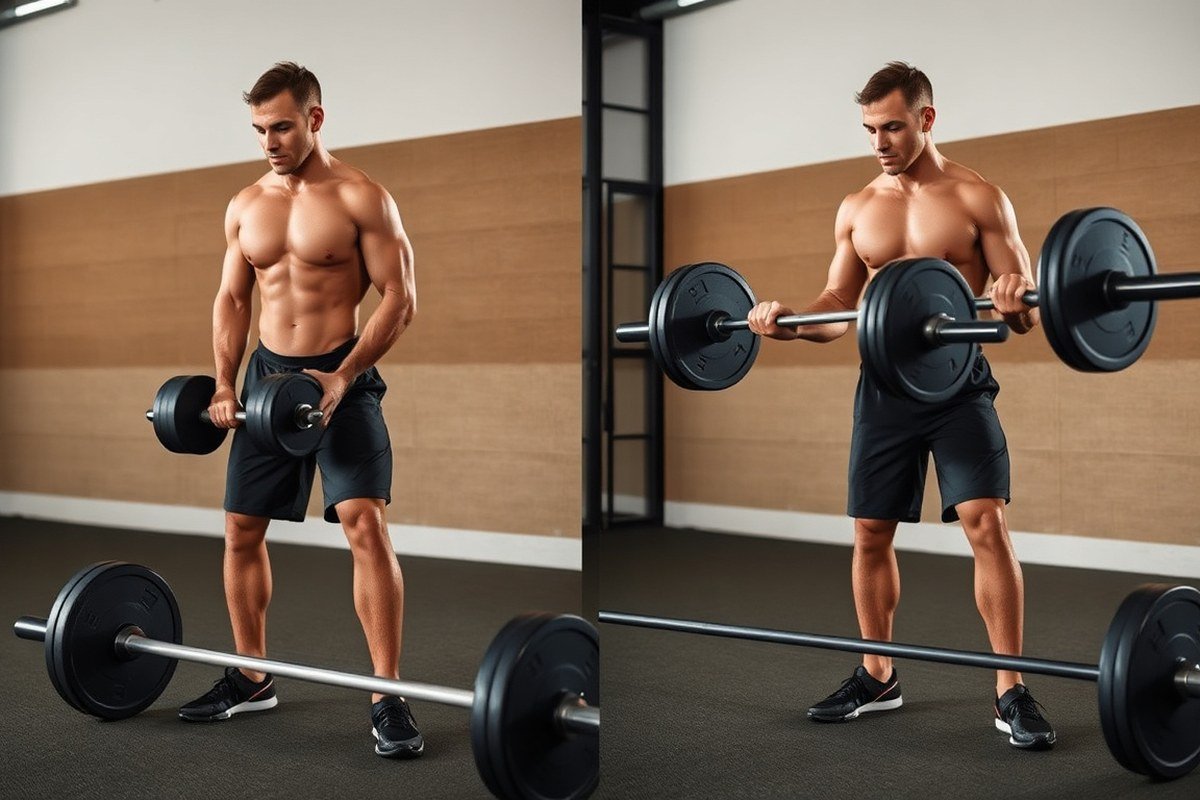
Are RDLs Better with Dumbbells or Barbell? A Complete Guide to Choosing Right
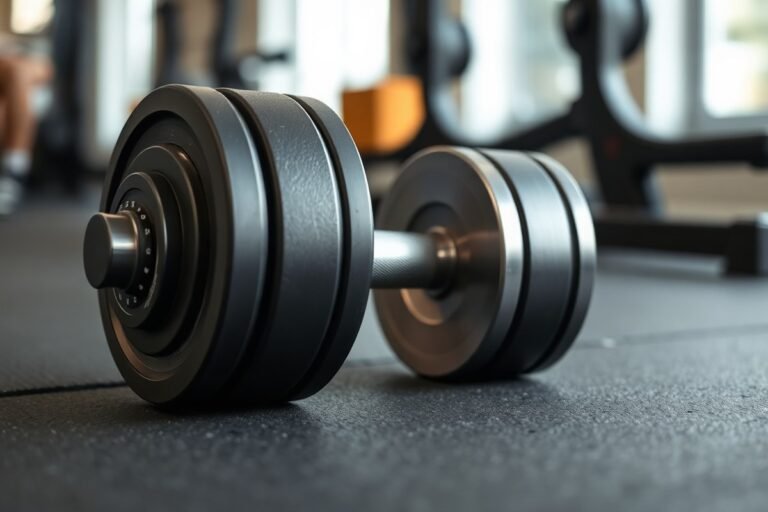
Choosing between dumbbells and barbells for RDLs hinges on your workout objectives and gear access. Barbells accommodate heavier loads, boosting strength development, whereas dumbbells allow finer weight adjustments and more natural joint movement. Use dumbbells first for steady improvement, then move to barbells to lift heavier.
Key Takeaways
- Barbell RDLs let you increase weight in 5-pound jumps, ideal once dumbbells max out around 40-50 pounds per hand.
- Dumbbells allow adding 1-2.5 pounds per hand, making them perfect for steady, gradual strength gains.
- Beginners can start barbell RDLs using just the 45-pound bar before adding plates.
- Keep dumbbells within 1, 2 inches of thighs and shins to maintain proper form and minimize injury risk.
- Grip strength often limits dumbbell RDLs at high loads, making barbells better past 100 pounds per side.
- Most gyms lack dumbbells heavier than 100-120 pounds, capping load potential compared to barbells.
Are Romanian Deadlifts Better with Dumbbells or Barbell?
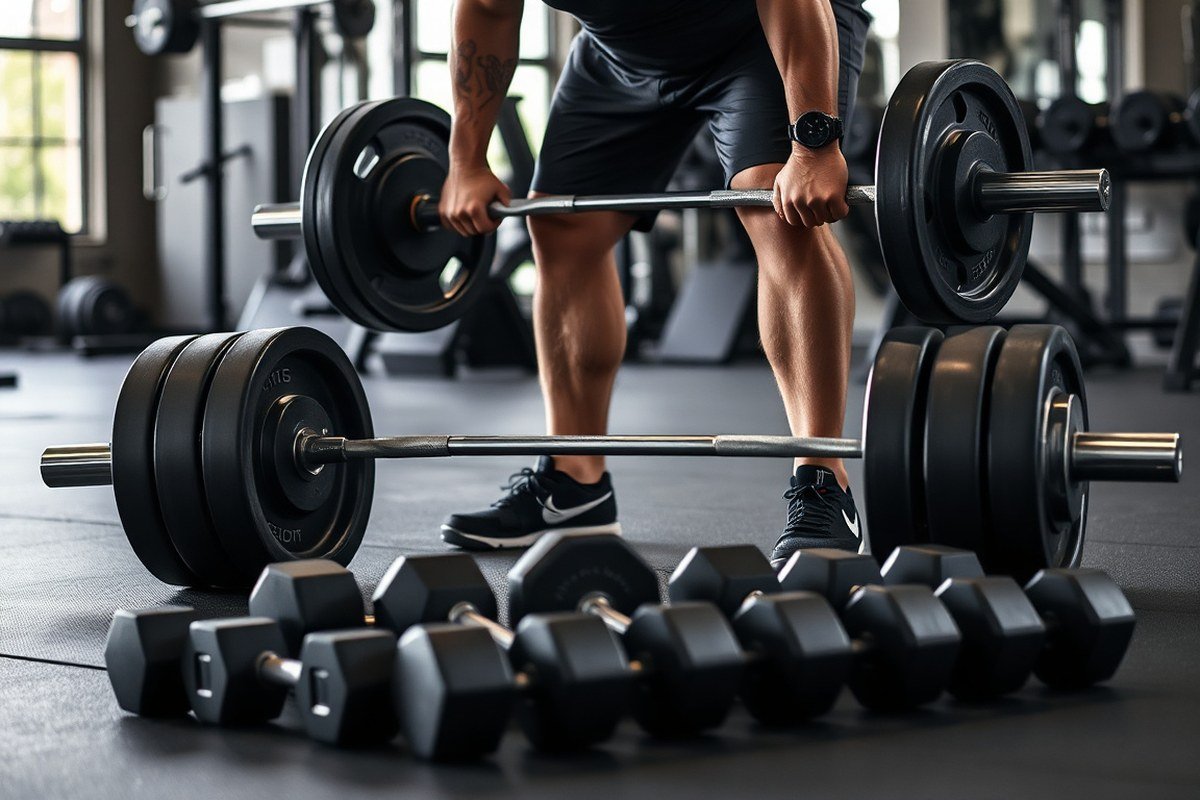
Barbell Romanian Deadlifts (RDLs) generally lead to greater strength gains due to their superior load capacity. Barbells allow you to stack more weight, which is key for building maximal strength and developing the posterior chain efficiently. The symmetrical grip provides stability, making it easier to handle heavier loads safely, assuming proper form. This makes barbell RDLs ideal if your primary goal is increasing strength and power.
Dumbbell RDLs offer advantages in muscle activation and safety, particularly for beginners. Because each arm moves independently, dumbbells require more stabilizer muscles to engage, improving muscle balance and coordination. This increased range of motion also gives a deeper stretch to the hamstrings and glutes. The lower load capacity limits maximal strength gains but reduces lower back stress, making dumbbells a safer option for those new to the movement or recovering from injury.
Progression with barbells is smoother thanks to standard plate increments, allowing for precise load increases. Dumbbells limit progression to the weights available, which might stall strength gains when heavier weights become necessary. However, dumbbells excel at correcting muscle imbalances and promoting unilateral control, which barbell RDLs are less suited for.
| Factor | Dumbbell RDL | Barbell RDL |
|---|---|---|
| Load Capacity | Limited by dumbbell size and grip strength | High load ceiling with plates |
| Muscle Activation | Higher stabilizer activation, better balance | Primary movers emphasized with less stabilizer demand |
| Safety | Lower risk of lower back strain, easier for beginners | Higher injury risk if form breaks at heavy loads |
| Progression | Limited by dumbbell increments | More precise, consistent loading increments |
You can build strength effectively with dumbbell RDLs up to the limit of your equipment. Consider switching to a barbell once the dumbbells no longer provide a challenging load in the 6 to 10 rep range. For beginners or those focusing on rehab, dumbbells offer a safer, more forgiving way to learn the movement with better muscle balance. For advanced lifters seeking heavy loading and maximal posterior chain power, barbell RDLs are generally the better choice.
Key Differences Between Dumbbell and Barbell Romanian Deadlifts
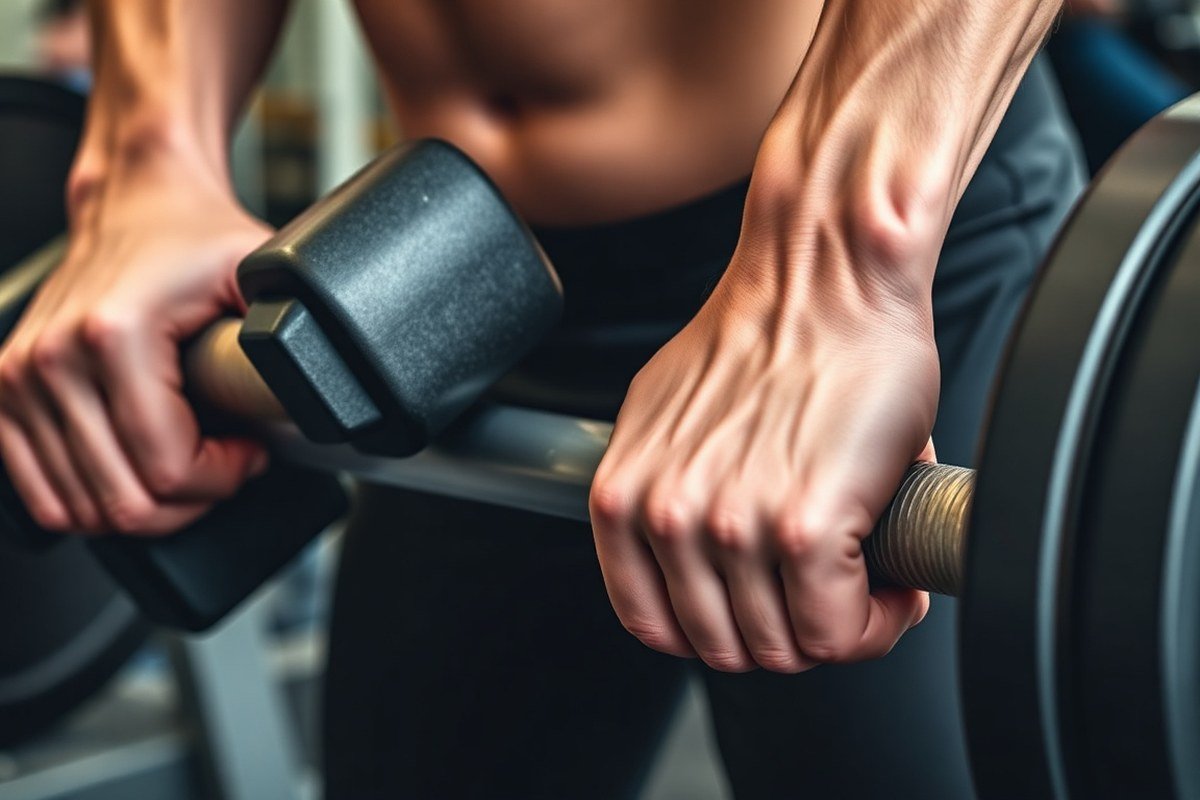
Romanian deadlifts with dumbbells and barbells have distinct mechanical differences that impact how you train and which muscles you emphasize. Dumbbells allow a more natural grip with palms facing your body, which often reduces strain on wrists and shoulders. This grip variation also gives you greater flexibility in movement path and a slightly increased Range of motion, letting you lower the dumbbells closer to your shins for a deeper hamstring stretch.
Barbell RDLs use a fixed overhand grip, generally with hands just outside the legs. This setup creates a more centralized Center of gravity and better load distribution. With the barbell’s stability, you maintain easier body alignment and can handle significantly heavier weights, often surpassing 300 pounds when plates are added. Dumbbells typically cap out in weight range once you reach what your rack or grip can hold, often around 40 to 50 pounds per hand for many lifters.
Dumbbell RDLs also allow unilateral training, letting each side work independently. This is beneficial if you want to correct strength imbalances or train balance and stability. Barbell RDLs are bilateral, with both hands sharing one load, which is good for building overall strength and maintaining symmetry but not as effective for addressing side-to-side differences.
| Feature | Dumbbell Romanian Deadlift | Barbell Romanian Deadlift |
|---|---|---|
| Grip | Palms face body, more natural grip | Overhand grip, hands outside legs |
| Load Distribution | Each side works independently | Even load across both sides |
| Center of Gravity | More lateral sway, less centralized | Centered and more balanced |
| Range of Motion | Greater, deeper hamstring stretch possible | Restricted by bar placement, less depth |
| Stability | Requires more core and balance control | More stable, easier to keep form |
| Unilateral Training | Possible for correcting imbalances | Not possible; bilateral only |
| Equipment Setup | No rack needed, easier setup | Requires barbell, plates, and often a rack |
Using dumbbells, you actively engage your stabilizer muscles more due to the independent load each side must control. That can improve balance and unilateral strength but limits the maximum weight load. With a barbell, you get improve stability and can handle heavier loads, which benefits strength gains but offers less unilateral movement control. Balancing these factors depends on what you want to prioritize in your training, such as correcting imbalances or lifting heavier.
How to Maximize Safety and Proper Form with Dumbbell or Barbell RDLs
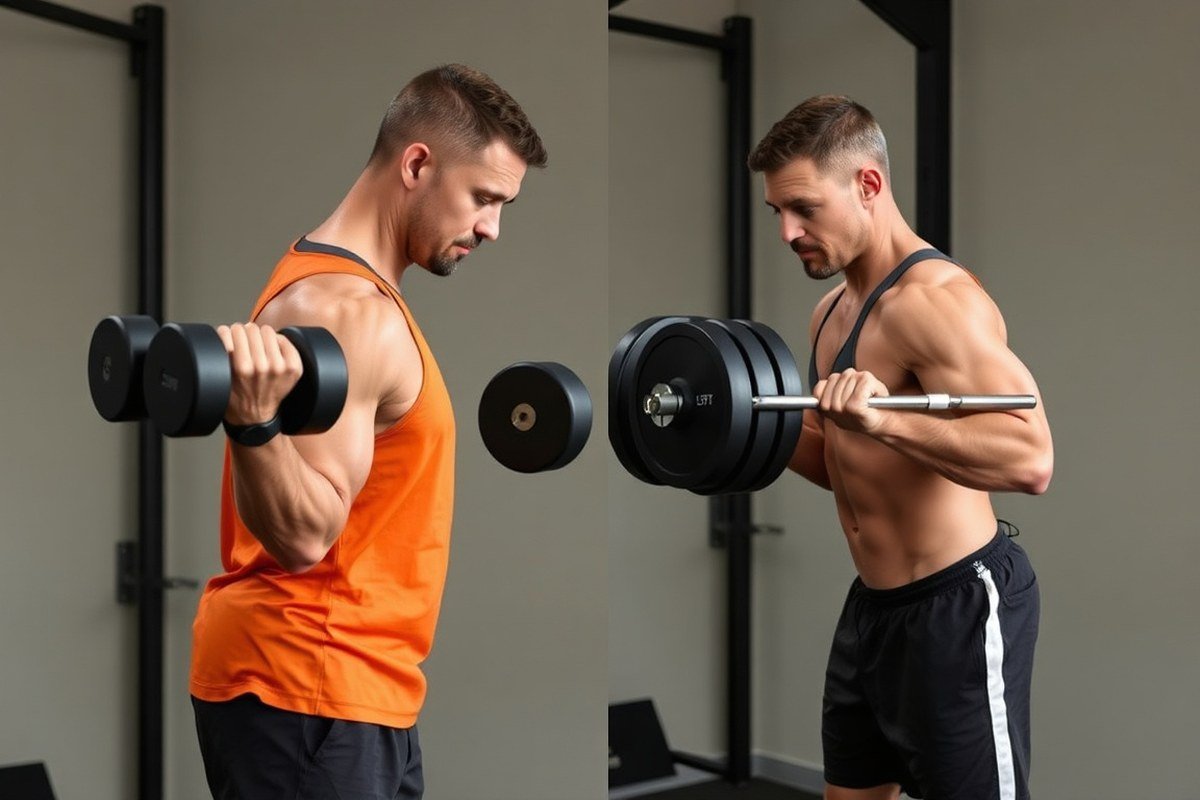
Maintaining proper form is critical with both dumbbell and barbell Romanian deadlifts to maximize safety and effectiveness. The key is to Push your hips back while keeping a flat, braced back. This shifts the load to your glutes and hamstrings and reduces strain on your lower back. Avoid excessive knee bend and keep the core engaged throughout the movement to stabilize your spine.
To minimize lower back stress, keep the weight close to your body. Dumbbells allow for a more natural hand path which can be easier on the lower back, while barbells provide a stable, fixed grip but may increase stress if form slips. Start with a light load to master the movement before progressing to heavier weights.
- Brace your core and keep your chest lifted to prevent rounding your back
- Keep the dumbbells or barbell close to your legs from floor to lockout to avoid pulling the lower back
- Push your hips backward first, maintaining only a slight knee bend
- Stand tall and squeeze your glutes at the top, avoiding leaning back
- Begin with lighter weights to perfect form before increasing load
- Adjust grip width with dumbbells if needed to reduce discomfort or imbalance
- Ensure gradual weight increases to prevent overload and injury
Common errors include rounding the back, letting weights drift forward, and bending the knees too much. Each mistake can increase injury risk, especially to the lower back. Fix these by bracing the core, maintaining a neutral spine, pushing hips back, and keeping the weights close. Equipment choice affects injury risk, with dumbbells often safer for those with back sensitivity due to their natural movement path. Barbells allow for heavier lifting but demand stricter form control.
When and How to Progress Weight with Dumbbell vs Barbell RDLs
Increasing weight in Romanian deadlifts requires careful progression to avoid injury and plateaus. With dumbbells, adding small increments often means buying new sets or increasing reps, which can be limiting. Grip strength can also cap your ability to hold heavier dumbbells, especially before your posterior chain muscles fatigue. Switching to a barbell removes these issues by allowing heavier loads on a single handle, providing better grip and the option for maximal strength training. You should consider moving to barbell RDLs once your dumbbells feel too light for 12 solid reps or when you want to focus on building raw strength rather than endurance or muscle tone. Follow this step-by-step progression to safely and effectively load your RDLs using dumbbells before switching to a barbell:
- Increase Reps First: When your current dumbbells feel manageable for 10 reps, increase sets or reps up to 12-15 to build endurance without jumping weights.
- Slow the Eccentric Phase: Lower the weight more slowly for 3 to 5 seconds to increase time under tension and muscle engagement without adding load.
- Add Single-Leg Variations: Use single-leg dumbbell RDLs to boost difficulty and unilateral strength without heavier weights.
- Purchase Incrementally Heavier Dumbbells: Add 5-10 pound increments when possible to your dumbbell selection to safely increase load.
- Improve Grip Strength: Use grip trainers or chalk, and try alternate holds to improve hold capacity and delay grip fatigue.
- Transition to Barbell RDLs: Shift when your dumbbells max out, your grip limits your sets, or you want fewer reps with heavier load to boost maximal strength.
- Use Mixed Programming: Combine dumbbell RDLs for volume/hypertrophy days and barbell RDLs for heavy strength days for balanced progress.
This progression typically takes 8 to 16 weeks for an intermediate lifter depending on access to equipment and grip training consistency. Carefully monitor your form as you increase load to avoid lower back strain. Grip issues often arise before hamstring fatigue, so building grip strength concurrently is essential for continual progress.
Integrating Dumbbell and Barbell RDLs into Your Training Program
Incorporating both dumbbell and barbell Romanian deadlifts into your training plan allows you to target strength, hypertrophy, and muscle balance effectively. Use the barbell RDLs earlier in your workout split or during leg/back days when you’re focusing on maximal strength and heavier loads. Barbell RDLs recruit large muscle groups like the hamstrings, glutes, and lower back more intensely, making them ideal for building overall strength. Aim for 3 to 5 sets of 4 to 6 reps with challenging weight to maximize strength gains.
Dumbbell RDLs work well later in the week or on accessory days when your goal shifts toward hypertrophy or correcting imbalances. Their range of motion and unilateral nature help engage stabilizer muscles and smaller groups often missed by barbell lifts. Program 2 to 4 sets of 8 to 12 reps, allowing you to stress the muscles under controlled conditions without excessive spinal compression. For rehab or unilateral work, single-leg dumbbell RDLs are particularly effective, fostering balanced development and addressing side-to-side discrepancies.
Alternating between dumbbell and barbell versions within a training week can optimize results by combining heavy loading with targeted muscle activation. For example, you might perform barbell RDLs on Monday for strength and follow with dumbbell RDLs or single-leg variations on Thursday for hypertrophy and balance work. This approach reduces overuse injuries by varying movement patterns and loading while stimulating hypertrophy through different muscle recruitment angles.
A practical template could look like this: Monday, barbell RDLs, 4 sets of 5 reps at 80-85% of your one-rep max; Thursday, dumbbell single-leg RDLs, 3 sets of 10 reps per leg with moderate weight. Adjust volume and intensity based on your recovery and experience. Using dumbbells 1 to 3 times a week fits well into most training programs, helping to develop balanced, functional strength without the higher spinal load barbell lifts carry. Remember to focus on quality form to get the most from both variations and avoid injury.
Overcoming Limitations and Equipment Challenges with Dumbbells or Barbell
Grip fatigue often limits your ability to load barbell Romanian deadlifts as heavy as your hamstrings and glutes can handle. Dumbbells at home usually top out around 50 to 60 pounds each, which might not be enough once your strength progresses beyond beginner gains. Using a barbell lets you easily surpass these weight limits, but you must manage grip strength since both hands hold the same bar. For home gyms with limited equipment, combining a barbell setup with a lighter dumbbell set provides versatility for warming up and maximally challenging muscles without constantly swapping gear.
To mitigate grip fatigue during heavy barbell RDLs, consider grip training outside of your main lifts to improve endurance. Incorporate exercises like farmer’s carries or static holds with moderate weight for 30-to-60 seconds. Chalk or liquid chalk can improve grip friction if your gym allows it, and using lifting straps during heavier sets can help maintain form without sacrificing load, though avoid using straps on every set to keep grip strength developing. Dumbbells are generally more practical in small home gyms due to requiring less space and no rack setup. But when weights are insufficient, You can use these strategies to work around limitations:
- Slow down the eccentric lowering phase to increase time under tension with lighter weights
- Add pauses at the bottom of the movement to increase difficulty without adding weight
- Use resistance bands anchored under your feet for extra load
- Do higher rep ranges (10 to 15 reps) to promote muscular endurance
- Incorporate unilateral RDLs with a single dumbbell to focus on control and balance
- Invest in adjustable dumbbells if budget allows, providing incremental weight increases up to 90+ pounds
- Use lifting straps or chalk to reduce grip failure on barbell sets
Properly timing your grip fatigue management and equipment optimization will help you continue challenging your posterior chain effectively without expensive or bulky setups. Strive for gradual progression over time and avoid compromising form to push past equipment limitations.
Your First 4 Weeks: A Step-by-Step RDL Training Plan
This plan helps you decide between dumbbell and barbell Romanian deadlifts based on your strength level, equipment, and goals.
- Week 1: Start with dumbbell RDLs using light to moderate weights. Focus on mastering hip hinge form and maintaining a neutral spine. Success looks like controlled movement without lower back strain.
- Week 2: Introduce barbell RDLs with an empty bar or very light weight. Check your ability to keep balance and an even bar path. You’re ready to progress when form remains strict throughout the set.
- Week 3: Increase load gradually on dumbbell or barbell RDLs, depending on which feels stronger and more stable. Notice if you can complete 3 sets of 8 to 12 reps without form breakdown.
- Week 4: Test both versions for a max working set to compare comfort and effectiveness. Choose the one that challenges your posterior chain efficiently while keeping technique solid.
- After Week 4: Integrate your chosen RDL style into your regular leg or posterior chain workouts 1 to 2 times per week, adjusting weight based on fatigue and recovery.
Frequently Asked Questions
Can You Build More Muscle with Barbell or Dumbbell RDLs?
Barbell RDLs typically allow you to lift heavier weights, promoting greater muscle growth. Dumbbells provide more range of motion and help address muscle imbalances, but may limit maximum load compared to barbells.
Are Dumbbell RDLs Safer for Beginners Than Barbell RDLs?
Dumbbell RDLs are often safer for beginners because they offer better control and reduce the risk of injury. Using lighter weights and easier grip adjustments also help beginners focus on proper form.
Do Dumbbells or Barbells Better Target Hamstrings During RDLs?
Both effectively target the hamstrings, but barbells allow for heavier loading which can increase strength. Dumbbells encourage more balanced muscle activation because each leg works independently.
Can You Do Single-Leg RDLs with a Barbell?
Single-leg RDLs are more practical with dumbbells because barbells require both hands and stable balance. Dumbbells let you isolate one leg to fix strength imbalances more easily.
Which RDL Variation Improves Grip Strength More, Dumbbells or Barbell?
Barbell RDLs generally improve grip strength more due to heavier loads and static holding. Dumbbells provide less resistance, making grip work less challenging but more accessible for newcomers.
Before You Go
Both dumbbell and barbell Romanian deadlifts have unique benefits depending on your equipment access, mobility, and strength goals. Trying both over a few weeks lets you see which feels safest and yields better muscle engagement. Pick your preferred RDL style and prioritize steady progression with proper form to strengthen your hamstrings and glutes effectively.