Are Elliptical Trainers Good for Knees? What Actually Works for Knee Health
Are elliptical trainers good for knees? Yes, they generally offer a low-impact workout that reduces stress on knee joints compared to running or walking. Ellipticals provide smooth movements and adjustable resistance, making them suitable for people with knee arthritis or joint concerns when used correctly. Start by choosing a machine with a stable frame and adjustable settings to match your comfort level, which helps protect your knees during exercise.
Key Takeaways
- Elliptical machines reduce knee impact by providing smooth, gliding motions that avoid jarring forces seen in running.
- Elliptical load ranges between 70% and 81% of body weight, so those with very low load tolerance should proceed cautiously.
- Adjust the stride length on ellipticals to match your natural movement, usually between 16 and 22 inches, to avoid knee strain.
- Use adjustable resistance and incline settings to gradually increase workout intensity without overloading your knees.
- Maintain proper form by keeping your feet flat and avoiding leaning heavily on handles to protect knee joints.
- Elliptical training combined with conventional therapy showed benefits for mild to moderate knee osteoarthritis within 12 weeks.
Are Elliptical Trainers Beneficial or Risky for Knee Health?
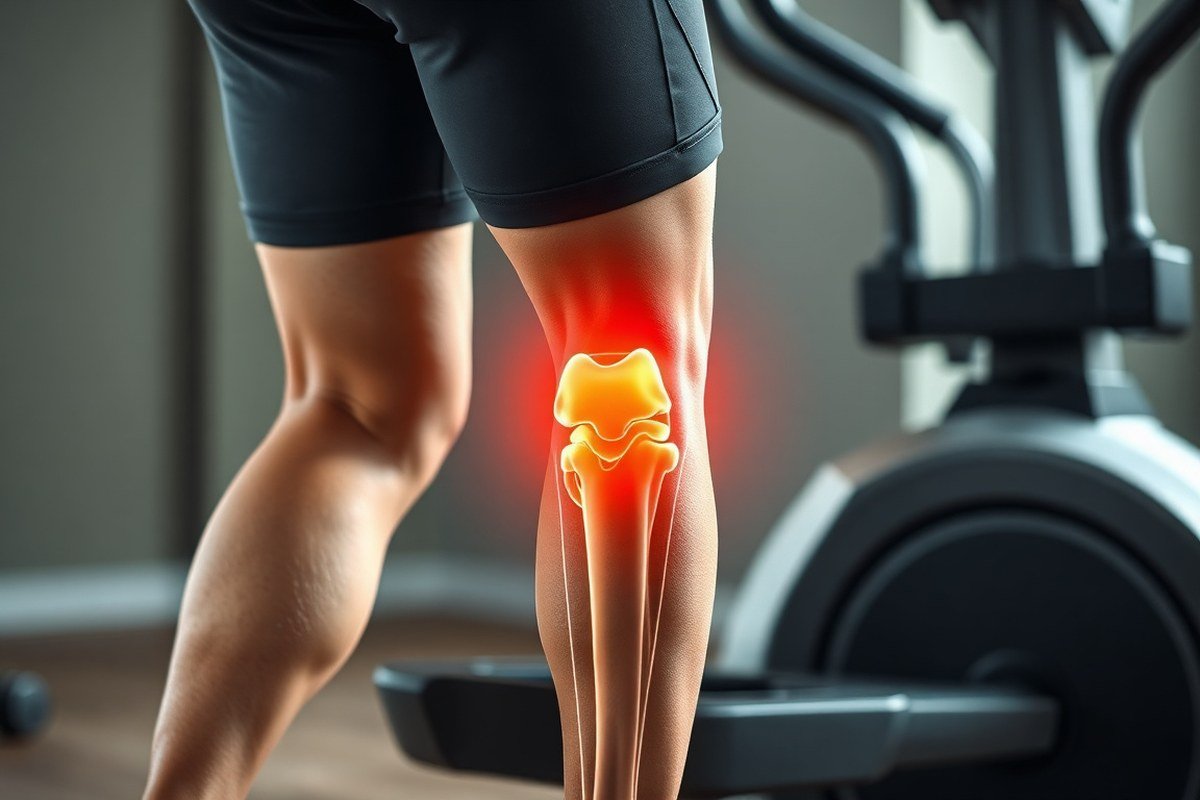
Elliptical trainers offer a low-impact cardio option that generally benefits knee health by reducing the stress associated with high-impact activities. Unlike running or jogging, where each foot strike sends a forceful impact through the knees, hips, and ankles, elliptical machines keep your feet on pedals that move in a smooth, continuous oval path. This motion lowers the shock transmitted to your joints, making it a preferred exercise choice for those with knee concerns or arthritis.
Biomechanical studies provide insight into how elliptical machines affect joint load. For example, research involving three people with instrumented knee replacements showed that peak knee force on an elliptical was about 2.24 times body weight, which was slightly higher than 2.05 times body weight observed during treadmill walking. These numbers indicate that elliptical use does not necessarily decrease knee joint load compared to walking. However, forces during jogging or running are significantly higher and involve impact forces absent on ellipticals.
A US cohort study tracking 415 overweight or obese adults over four years found the smallest increase in knee joint degeneration among those reporting regular elliptical use. In a clinical trial with 28 people aged around 51 who had early-stage knee osteoarthritis, 12 weeks of elliptical training combined with conventional therapy improved outcomes more than therapy alone. These findings support ellipticals as a suitable exercise for individuals managing arthritis or knee pain.
The fixed stride length of elliptical machines, typically between 16 to 22 inches, allows controlled knee motion and may help prevent aggravation of symptoms. While peak knee forces can be comparable to walking, the low-impact nature and smooth motion make ellipticals safer than running or jumping exercises. That said, elliptical training is best tailored to your pain level and fitness goals, ensuring resistance and duration do not overstress your joints.
How to Use an Elliptical to Protect Your Knees and Maximize Benefits
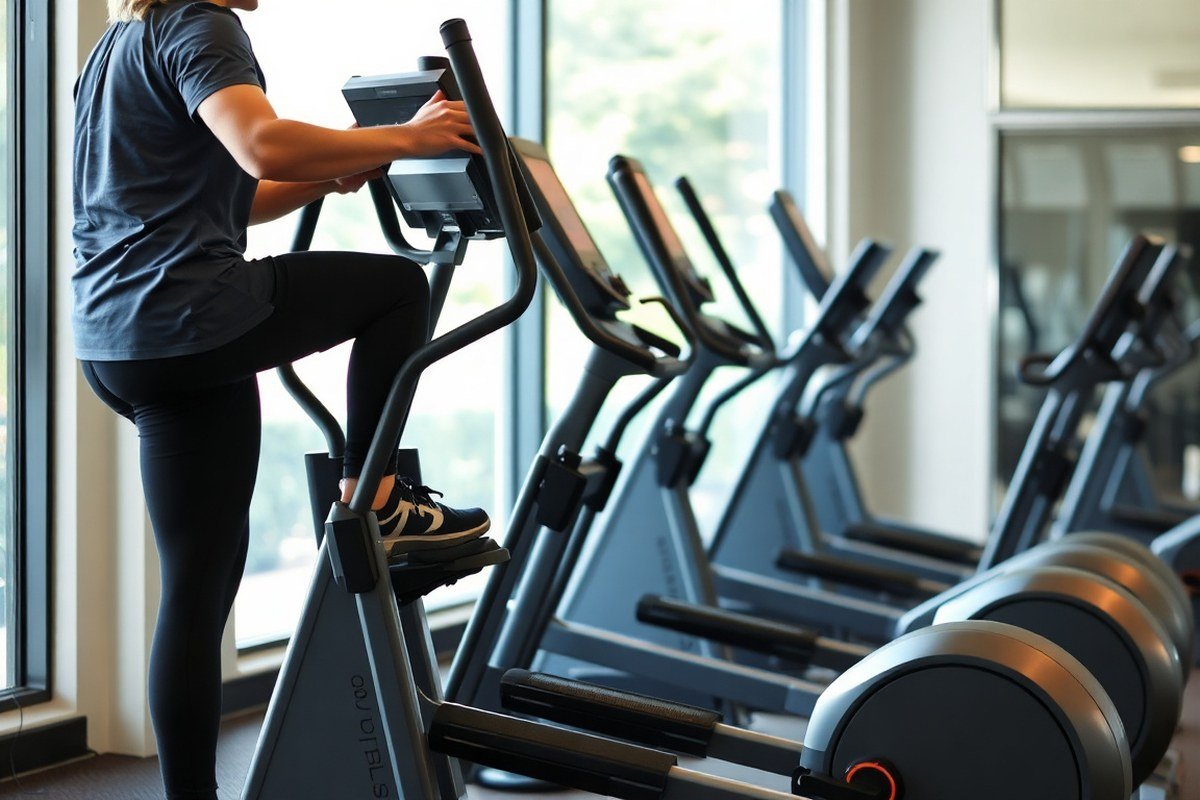
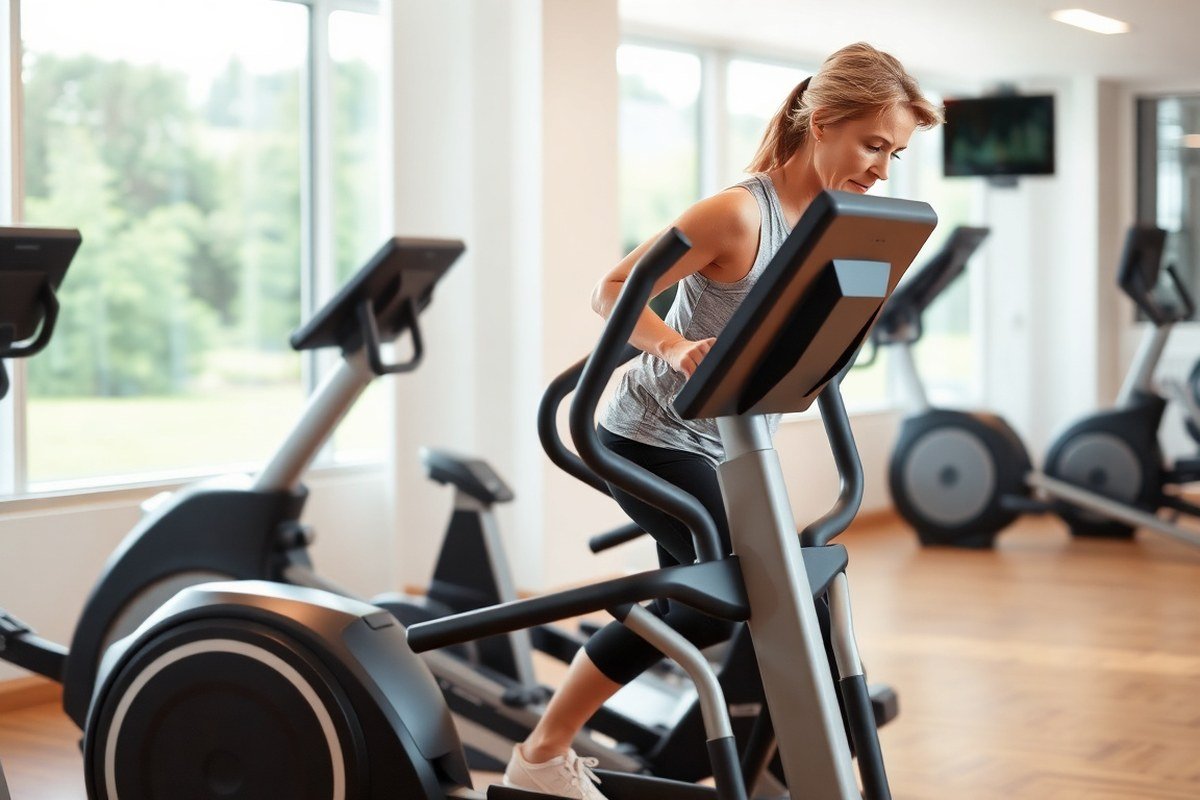
Proper form on an elliptical is essential to reduce knee strain and avoid injury. Keep your knees aligned with your feet to prevent twisting motions, which stress knee joints. Maintain an upright posture with a slight forward lean from the hips, not the waist. This helps distribute your weight evenly and prevents undue pressure on the knees. Avoid locking your knees at the end of each pedal stroke by keeping a gentle bend, which absorbs shock and protects the joints.
Adjusting machine settings is key to minimizing knee stress. Start with low resistance and incline levels; increasing these gradually lets your knees adapt to the workout without sudden overload. For example, begin with resistance settings around 3 to 5 on a 20-level scale and an incline below 5%. Add resistance in small increments as you warm up and feel comfortable. Using a well-built machine, such as trusted models from brands like HARISON, ensures smoother motion and better joint support.
- Step on the machine and position your feet flat, centered on the pedals
- Set resistance and incline low to moderate; increase in 10-15% increments each session
- Maintain knee alignment with toes and avoid inward or outward collapse during the stroke
- Keep a slight bend in the knees, never locking them straight
- Hold handrails lightly for balance without leaning heavily on them
- Use a smooth, steady pace rather than quick, jerky movements
Avoid common mistakes like overextending your stride or leaning forward too much, which can throw off alignment and add stress on the knees. Do not increase resistance too quickly; sudden high loads may worsen knee problems. Also, do not grip the side handles too tightly or use them to support your entire body weight, as this can alter your natural movement and knee loading. Correct setup and form create a balance that maximizes benefits and keeps your knees safe.
When Is Elliptical Training Suitable or Unsuitable for Knee Conditions?
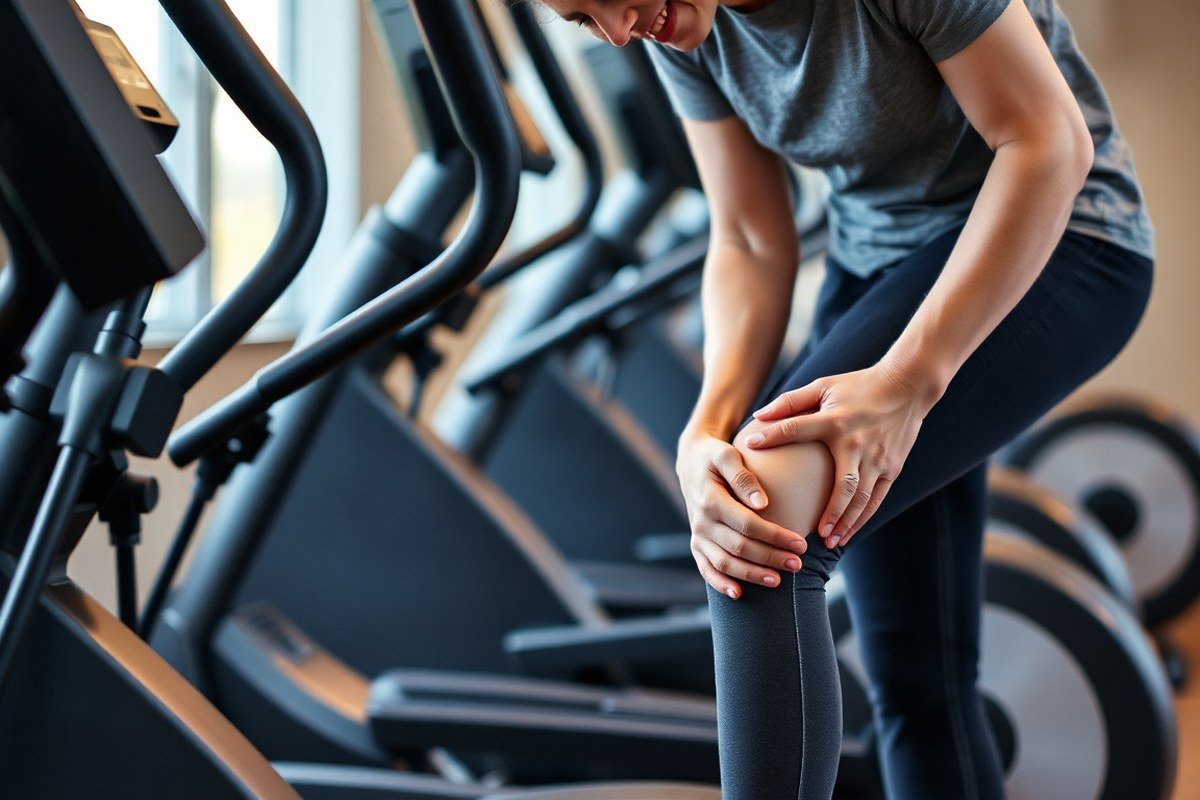
Elliptical training can be a helpful low-impact exercise for some knee conditions, but it is not suitable for everyone. You should avoid using an elliptical if you experience severe knee pain, swelling, instability, or a recent ligament or meniscus injury. Conditions such as acute inflammation from arthritis flare-ups or recovering from knee surgery require cautious evaluation before starting elliptical workouts.
Consult your doctor or physical therapist before beginning elliptical training, especially if you have had knee surgery or a knee replacement. These professionals can help determine if your specific knee condition can tolerate the 2.24 times bodyweight peak knee force reported in elliptical use, which is higher than cycling but comparable to slow treadmill walking.
- Stop elliptical exercise if you notice increased knee pain lasting more than 24 hours.
- Avoid elliptical use with sudden swelling or locking of the knee joint.
- Do not use an elliptical with persistent joint instability or feeling of giving way.
- Consult a professional if you experience sharp pain during or after workouts.
- Do not begin elliptical training without medical advice after recent knee surgery or replacement.
Elliptical trainers can raise knee torque, especially at faster pedalling rates, so people with compromised knee structures should be cautious. Taking at least one day off between sessions prevents overload and injury risk. Choosing built-in elliptical programs that alternate intensity can help manage joint stress. Clear communication with a healthcare provider ensures a safe, tailored approach to elliptical training for your knees.
Comparing Elliptical Trainers with Treadmills and Exercise Bikes for Knees
When choosing between an elliptical trainer, treadmill, and stationary bike for knee health, the main factors are joint impact, knee load, and overall exercise benefits. Ellipticals provide low-impact motion that reduces stress on knee joints compared to treadmills, which involve more direct foot strike and weight bearing. Stationary bikes offer low joint loading but may engage fewer muscles around the knee. Knowing these differences helps select the right equipment based on your knee pain or arthritis.
| Feature | Elliptical | Treadmill | Stationary Bike |
|---|---|---|---|
| Impact Level | Low to no impact; smooth gliding motion | Moderate to high impact; repetitive foot strikes | Very low impact; seated cycling |
| Knee Joint Load | Low load, but knee torque can be higher than bike | Higher load due to weight bearing and impact | Lowest knee torque; less joint stress |
| Muscle Engagement | Activates multiple lower-body muscles, especially quads | Engages leg muscles primarily in weight-bearing stance | Primarily targets quadriceps and hamstrings |
| Calories Burned (per 30 min) | Medium to high (varies by intensity) | High (due to weight-bearing effort) | Lower to medium |
| Usability for Knee Issues | Recommended for knee pain; consult PT for form | Riskier if joint pain is severe; adjust speed and incline | Good for mild to moderate pain; less weight bearing |
| Cost Range | $500 to $2,500+ | $400 to $3,000+ | $200 to $1,500+ |
Elliptical trainers offer an effective blend of low impact with meaningful knee muscle activation, making them better suited for many with knee concerns than high-impact treadmills. Stationary bikes carry very little impact but tend to activate fewer muscles around the knee, which might limit strength gains needed for joint support. Exact choice depends on your pain level, fitness goals, and advice from healthcare providers.
How Long and How Often Should You Use an Elliptical for Knee Health?
Using an elliptical for knee health works best when you balance duration, frequency, and intensity carefully. Aim for 20 to 30 minutes per session, doing this three to five times a week to support knee pain relief, fitness, and weight management. Moderate effort equals about 180 calories burned in 30 minutes for a person weighing 154 pounds (70 kg), which helps reduce stress on knees by lowering body weight.
Warm-up and cool-down routines are essential to protect your knees. These prepare your joints and muscles for exercise and prevent stiffness afterward. Start with gentle movements that increase blood flow without strain. Finish with light stretches to maintain mobility and reduce soreness. Here’s a practical warm-up, workout, and cool-down routine tailored to knee-friendly elliptical training:
- Warm up with 5 minutes of slow pedalling at low resistance. Focus on smooth, controlled motions to get blood flowing around your knee joints.
- Increase intensity gradually over the next 2 to 3 minutes by raising resistance or speed to a moderate level, where you can talk but feel exertion (around 5 METs).
- Exercise steadily for 20 to 25 minutes at this moderate effort, maintaining a steady pace without hopping off unless knee pain begins.
- Adjust resistance and incline rather than speed if you want to add challenge. Vigorous effort (about 9 METs) burns more calories but risks knee discomfort if done too long or hard.
- Stop immediately if you experience knee pain. Consult a healthcare provider rather than pushing through discomfort.
- Cool down with 5 minutes of slow pedaling at low resistance to gradually lower heart rate and ease joint stress.
- Finish with gentle stretches focusing on the quadriceps, hamstrings, calves, and hip muscles to maintain joint flexibility and reduce stiffness.
Consistency matters most to see improvements in knee pain and overall fitness. Modifying workout intensity based on your condition and recovery ensures safer progress while managing weight to ease joint load.
Your First 30 Days: A Quick-Start Plan to Protect Your Knees on an Elliptical
Start using the elliptical trainer cautiously to support your knee health and avoid pain. Follow these steps to build safe, effective workouts.
- Before You Start: Have a healthcare professional check your knee condition to confirm elliptical training is appropriate. This helps avoid aggravating any issues.
- Day 1, 3: Use the elliptical for 5 to 10 minutes at low resistance, keeping your pace steady. Stop if you feel any knee pain beyond mild discomfort.
- Week 1: Increase your session to 15 minutes, still at low to moderate resistance. Notice if your knees feel stable and without sharp pain after exercise.
- Week 2: Add 5-minute intervals of slightly higher resistance. Maintain proper form, focusing on a full, smooth stride to reduce knee stress.
- Week 3: Aim for 20 to 30 minutes, three times per week, but only if your knees feel comfortable during and after sessions. Use the elliptical’s adjustable settings to avoid overloading your joints.
- After Week 4: Evaluate knee comfort and function. Should you experience pain or swelling, cut back on duration or resistance and think about seeing your doctor or physical therapist.
- Ongoing: Combine elliptical workouts with strength exercises for muscles around your knees to improve joint support and reduce injury risk.
Frequently Asked Questions
Can Elliptical Trainers Help Reduce Knee Pain?
Yes, elliptical trainers offer low-impact exercise that reduces stress on knees, easing pain during workouts. Maintaining proper form improve their protective benefits for your joints.
Are Elliptical Machines Safe for Arthritis in the Knees?
Elliptical trainers are generally safe for knee arthritis as they limit joint impact compared to running. Adjust resistance and duration to avoid overloading sensitive knees.
How Does an Elliptical Compare to Running for Knee Health?
Ellipticals cause less joint impact than running because your feet stay on the pedals throughout. This lowers the risk of knee injuries and joint wear.
Can Improper Use of an Elliptical Harm Your Knees?
Poor form, like locking knees or using uneven resistance, can strain your joints. Following correct posture minimizes injury risk.
Is It Better to Use an Elliptical or a Stationary Bike for Weak Knees?
Ellipticals provide a natural motion with less knee flexion than bikes, often making them more comfortable for weak knees. Consider personal comfort and medical advice.
Before You Go
Elliptical trainers offer a low-impact cardio option that can be gentle on your knees when used correctly. Listening to your body and adjusting resistance and duration are key to avoiding harm. Start slow and focus on consistency to get the most benefit without aggravating your joints. Should any pain increase, get advice to safeguard your knee health.