
Can HSA Be Used for Gym Membership? Clear Rules and Smart Tips
Can HSA be used for gym membership? Generally, no. Gym memberships are not qualified medical expenses, so paying for them with HSA funds usually results in taxes plus a 20% penalty if you’re under 65. However, if your doctor provides a Letter of Medical Necessity for a specific medical condition, you may be able to use your HSA to cover membership costs. Start by checking gyms in the Flex Marketplace that offer quick eligibility assessments and can provide an LMN within 24 hours, making it easier to confirm if your gym membership qualifies.
Key Takeaways
- Only gym memberships prescribed via a Letter of Medical Necessity qualify for HSA reimbursement.
- Paying gym fees without a qualifying condition triggers a 20% penalty and income tax on that amount if under age 65.
- Flex Marketplace gyms offer quick eligibility checks and can provide an LMN to support HSA use.
- You can use the same LMN for repeated monthly membership payments within a 12-month period.
- Out-of-pocket gym expenses may be tax deductible if total medical costs exceed 7.5% of your Adjusted Gross Income.
- Contributions made through payroll deduction save additional FICA taxes, adding to HSA advantages.
Can You Use HSA Funds for Gym Memberships?

The IRS does not allow you to use your HSA funds to cover a gym membership because it views these costs as general wellness rather than medical expenses. Paying for a gym membership is seen as a lifestyle choice, not a necessary medical treatment or prevention method. Because of this classification, HSA withdrawals for gym fees are only permitted with a strong medical reason backed by documentation.
Gym memberships can become eligible for HSA use only if a doctor prescribes the membership to treat a specific medical condition. This requires a Letter of Medical Necessity (LMN) that clearly states the gym membership is part of a prescribed treatment or rehabilitation plan. The medical professional must link the gym attendance directly to managing or improving a diagnosed health condition, such as obesity, hypertension, or physical therapy recovery. Without this documentation, even a doctor’s recommendation alone typically won’t qualify the expense.
To use HSA funds legitimately, you must submit your doctor’s letter, detailed receipts, and membership records to your HSA provider for approval. Confirming eligibility before paying helps avoid unwanted taxes and penalties, which can occur if the IRS reclassifies your gym membership as a non-qualified expense. The key decision rule is whether the gym membership is Medically necessary and documented by a healthcare provider in a way that meets IRS guidelines. Your gym membership needs to meet specific criteria to be eligible for HSA coverage; otherwise, you must use after-tax money to pay for it or explore other fitness expenses that qualify for HSA reimbursement.
Which Medical Conditions Qualify a Gym Membership for HSA Use?

You can use HSA funds for a gym membership only if a licensed healthcare provider diagnoses you with a specific medical condition and prescribes exercise as part of your treatment plan. The IRS limits gym membership eligibility to cases where it’s a necessary medical expense, not general wellness. Conditions like Obesity, type 2 diabetes, high blood pressure, and heart disease commonly qualify because exercise is a recognized part of managing these illnesses.
The IRS requirements are strict: general fitness or wellness memberships don’t qualify. Your doctor’s prescription or Letter of Medical Necessity (LMN) must clearly state that the gym membership is essential for treating your diagnosed condition. Without that documentation, HSA funds can’t be used without risking tax penalties. Common medical conditions that typically make gym memberships eligible include:
- Obesity or morbid obesity
- Type 2 diabetes
- Hypertension (high blood pressure)
- Cardiovascular disease or heart conditions
- Arthritis or mobility impairments
- Depression or anxiety when exercise is part of therapy
- Post-surgery recovery requiring physical activity
These diagnoses often pass IRS scrutiny because exercise is prescribed and not just recommended. To qualify, the gym membership or exercise program must be directly linked to your medical treatment. For example, if your doctor includes regular exercise to control diabetes, you can ask for a formal LMN and pay membership fees with your HSA. Costs are limited to the prescribed program and don’t include extras like spa services.
How to Obtain and Use a Letter of Medical Necessity (LMN)
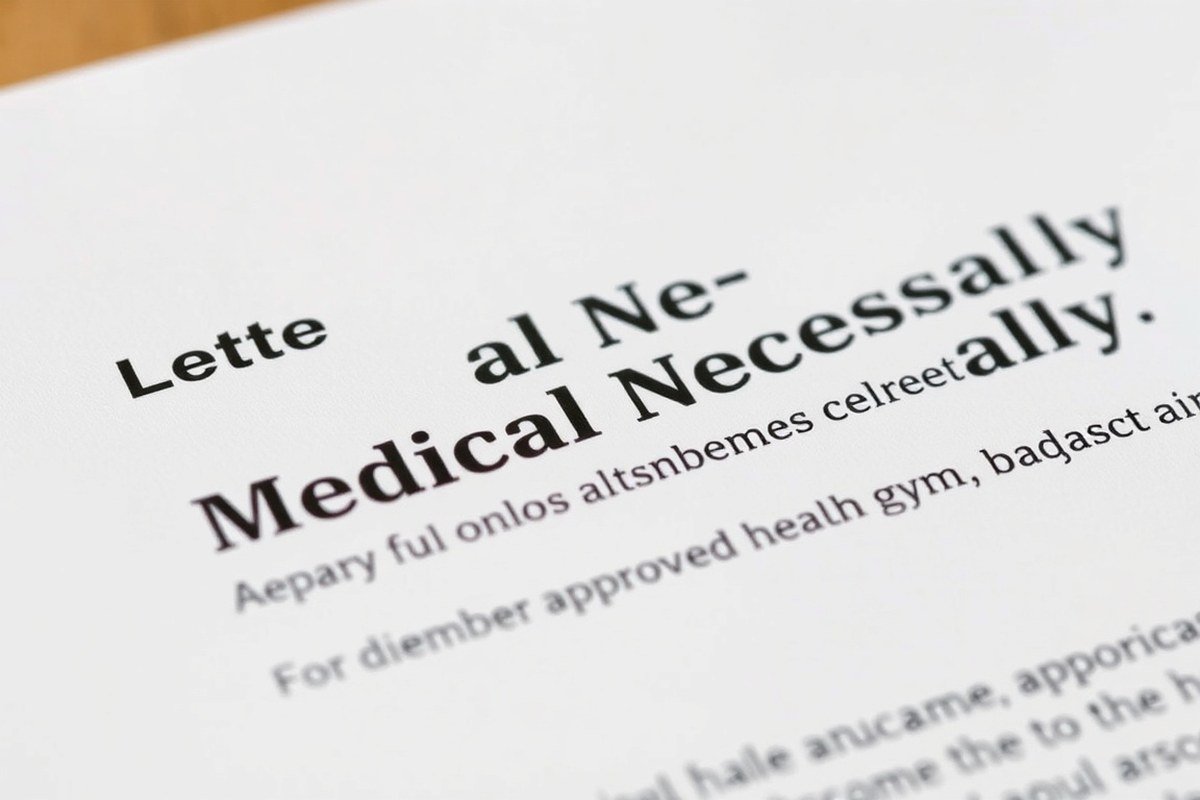
Obtaining a Letter of Medical Necessity (LMN) is essential for using your HSA to reimburse gym memberships tied to a qualifying medical condition. The LMN must come from your doctor, clearly stating your diagnosis and explaining how the gym membership supports your treatment or prevention plan. This letter acts as official documentation your HSA administrator requires to approve the expense. Here is a step-by-step process to get your LMN and use it effectively for reimbursement:
- Schedule a doctor’s appointment to discuss your medical condition and the need for a gym membership as part of your treatment. Some providers offer online consultations for faster service, often costing around $19.
- Request the LMN during the visit. Ensure the letter includes your diagnosis, why exercise is necessary, and specifically states that a gym membership is essential for your health management.
- Confirm your HSA administrator’s policy before paying for the membership. Submit the LMN to them and ask for written confirmation that the gym membership qualifies for reimbursement.
- Pay for the gym membership out-of-pocket after receiving approval, then save your payment receipts carefully.
- Submit your reimbursement claim through your HSA provider’s online portal or app, attaching the LMN along with the receipt for the gym membership.
- Maintain your LMN records. Typically, the letter remains valid for 12 months, allowing you to submit repeated monthly membership fees for reimbursement without needing a new letter each time.
Sample LMN wording might read: “Patient [Name] has been diagnosed with [Condition]. A gym membership is necessary as part of the prescribed treatment plan to improve health outcomes and manage this condition effectively.” Including specific dates and doctor contact info strengthens the letter’s validity.
Starting this process before purchasing your membership helps avoid denied claims. Getting an LMN quickly can be done through some online telehealth services, but traditional doctor visits ensure thorough assessment and documentation.
Comparing HSA and FSA Rules for Gym Membership Coverage
Health Savings Accounts (HSAs) and Flexible Spending Accounts (FSAs) may allow gym membership expenses, but only if a licensed healthcare provider issues a Letter of Medical Necessity (LMN). This letter must document that attending a gym is part of a prescribed treatment for a medical diagnosis. While this condition applies equally to both account types, the regulations around account usage, employer participation, and whether funds can roll over vary widely. The table below compares key aspects of HSAs and FSAs regarding gym membership coverage:
| Account | Gym Membership Coverage | Employer Involvement | Rolls Over |
|---|---|---|---|
| HSA | Only if prescribed for a medical condition | No | Yes |
| FSA | Only if prescribed for a medical condition | Yes | No (use-it-or-lose-it) |
| HRA | Depends on employer plan | Yes | No |
HSAs allow you to Carry over unused funds year to year and give you more control without employer approval for specific expenses. FSAs require employer setup and participation, and unused funds typically expire at the end of the plan year. This means that if you plan to use your account for fitness expenses repeatedly, an HSA might be better suited for gym memberships tied to medical treatment.
You cannot use both accounts simultaneously on the same gym membership. You must choose one account to cover those expenses because double reimbursement is not permitted under IRS rules. Deciding between HSA and FSA depends on your access, employer benefits, and preference for rollover flexibility.
Safe Practices and Penalties When Using HSA for Gym Memberships
Using your HSA funds for a gym membership that does not qualify as a medical expense will trigger both tax consequences and penalties. The IRS treats any non-qualified distribution from your HSA as taxable income and adds a 20% penalty if you are under 65 years old. This means the amount you spend on a regular gym membership without proper medical documentation will be taxed as ordinary income and penalized, making it a costly mistake.
Common errors include failing to keep a Letter of Medical Necessity (LMN) from your doctor, lacking clear linkage between the gym membership and a diagnosed medical condition, or not retaining records for several years. Documentation is essential since it proves your expenses meet IRS criteria under Code 213(d). Without such proof, HSA administrators typically deny reimbursements for gym dues.
To avoid audits or penalties, keep detailed receipts and any medical prescriptions or LMNs related to your gym membership. Store these documents securely for at least the length of time recommended by the IRS, generally several years after the tax year of the expenditure. Before using HSA funds for a gym, verify with your plan administrator whether the expense qualifies based on your medical condition and paperwork. This helps prevent rejected claims and unwanted tax issues.
Following IRS rules closely and maintaining thorough proof of your gym membership’s medical necessity can help protect you from penalties and ensure you maximize your HSA benefits. Paying for a non-qualified gym membership with HSA money often ends up costing more due to taxes and fines than paying out of pocket.
Partner Gyms and Marketplaces That Facilitate HSA Gym Memberships
Several gyms and fitness marketplaces simplify using your HSA or FSA to cover memberships once you have a Letter of Medical Necessity (LMN). Partner gyms often integrate with platforms like Flex and Truemed, which streamline eligibility verification and offer quick LMN consultations. These marketplaces connect you directly with licensed clinicians who evaluate if a gym membership qualifies as a reimbursable medical expense.
The Flex marketplace supports popular gym brands such as Equinox and Ladder Health. It enables you to use your HSA or FSA card for memberships during checkout if a clinician approves your LMN. Truemed operates similarly but offers a broader range of wellness providers beyond gyms, with LMN fees typically displayed at checkout, often around $15, and turnaround times varying by provider.
- Equinox: Partners with Flex for LMN approval and HSA/FSA payment support.
- Ladder Health: Available through Flex with integrated LMN consultation options.
- Barry’s: Supports HSA/FSA payments when you provide an LMN through partner marketplaces.
- CorePower Yoga and CrossFit: Eligible via marketplaces offering medical necessity verification.
- 24 Hour Fitness: Offers flexible memberships and personalized training accepted under FSA/HSA rules with appropriate LMN.
Using these platforms means you can usually pay directly with your HSA or FSA card at checkout or seek reimbursement from your plan. The key steps are selecting a partner gym in the marketplace, submitting or obtaining an LMN through the clinician consultation feature, and then completing your purchase. Costs for the LMN vary but tend to be low, and eligibility discussions typically take minutes. Taking care to use partner gyms and marketplaces minimizes confusion and ensures your payments align with IRS requirements about medical necessity.
| Gym/Platform | LMN Fee | Payment Method | Turnaround Time |
|---|---|---|---|
| Flex Marketplace (Equinox, Ladder Health) | $15 typical at checkout | HSA/FSA card at checkout or reimbursement | Varies by clinician; usually within hours or a day |
| Truemed | Varies by provider; shown at checkout | Checkout or reimbursement | Varies |
| Barry’s, CorePower Yoga, CrossFit | Dependent on marketplace clinician | Reimbursement via HSA/FSA with LMN | Dependent on clinician response |
| 24 Hour Fitness | Depends on clinician or facility | Reimbursement after providing LMN | Varies |
Other Fitness Expenses Eligible for HSA Beyond Gym Memberships
Several fitness and wellness expenses beyond typical gym memberships qualify for HSA spending when prescribed by a medical professional. These include physical therapy sessions, cardiac rehabilitation programs, and weight loss programs specifically recommended for treating a medical condition. Certain types of home exercise equipment may also be eligible, particularly if a doctor confirms their medical necessity. This coverage allows you to pay for therapeutic fitness options designed to improve or maintain health rather than general fitness activities.
You can also use your HSA for personal training costs or fitness classes if they are part of a prescribed therapeutic program. Wellness programs that focus on smoking cessation or disability fitness exercises may qualify as well, since they contribute directly to managing or preventing illness. Keeping detailed documentation, such as a doctor’s note or prescription, helps prove the medical purpose of these expenses and supports your claims if questioned by the IRS.
- Physical therapy and rehabilitation exercise programs
- Weight loss programs prescribed to treat obesity or related diseases
- Medically necessary home exercise equipment like treadmills or stationary bikes
- Personal training and fitness classes tied to treatment plans
- Smoking cessation programs including exercise components
- Special fitness programs for disabilities or chronic conditions
When submitting expenses for reimbursement, save all receipts and include a letter from your healthcare provider detailing the medical purpose of the fitness expense. This documentation should specify the condition being treated and why the fitness activity or equipment is necessary. Using apps or centralized stores that list eligible HSA purchases can simplify identifying qualified fitness expenses and help you apply your funds correctly.
Step-by-Step Action Plan for Using Your HSA on Gym Memberships
Use this plan to confidently decide if your gym membership can be paid with your HSA and make sure you meet all requirements without risk.
- Before You Buy: Check if your gym is a Partner gym or listed in a health-focused marketplace. Confirm their acceptance of HSA payments to avoid issues at checkout.
- Day 1: Obtain a Letter of Medical Necessity (LMN) from your healthcare provider if you have a qualifying condition. The letter must explain why gym use is essential for treatment.
- Day 2: Submit the LMN and your gym membership plan to your HSA plan administrator for approval. Wait for confirmation that the expense is eligible under your HSA rules.
- Week 1: Enroll in the gym and pay using your HSA card or submit reimbursement requests with receipts and the LMN. Keep detailed records for tax purposes.
- After 1 Month: Monitor your HSA statements to ensure charges are processed correctly and no unexpected denials or penalties occur.
- Ongoing: Track your medical condition and gym usage. Update your LMN annually or if your health status changes to maintain eligibility.
- Quarterly: Review other eligible fitness expenses that can be paid through your HSA to maximize your funds beyond the gym membership.
Frequently Asked Questions
Can I Use My HSA for a Gym Membership If My Doctor Just Says I Should “Get More Exercise”?
No, you cannot use HSA funds for gym memberships based simply on general advice to exercise. A formal Letter of Medical Necessity is required, specifying that the gym membership is part of a treatment plan for a diagnosed health issue.
Are Gym Memberships That Qualify for HSA Coverage Also Eligible Under FSA Rules?
Yes, gym memberships that are eligible for HSA coverage are also eligible under FSA rules because both follow identical guidelines on medical necessity.
How Can I Quickly Find Gyms That Accept HSA for Memberships?
Use the Flex Marketplace to browse partner gyms, where you can get eligibility questions answered and obtain a Letter of Medical Necessity within 24 hours.
What Documentation Should I Keep If I Use HSA Funds for a Gym Membership?
Keep your Letter of Medical Necessity and any supporting doctor’s notes, as these documents prove your medical condition and treatment plan if the IRS audits your HSA spending.
Can a Gym Membership Be Reimbursed from HSA If It’s for Preventive Wellness Without Diagnosis?
No, preventive wellness alone does not qualify a gym membership for HSA reimbursement; it must be prescribed for a specific medical condition with proper documentation.
Before You Go
Using your HSA for a gym membership can be a valuable way to invest in your health, but only certain medical conditions make this possible under IRS rules. Getting a valid Letter of Medical Necessity and working with your HSA administrator are key to avoiding penalties. Take the first step today by talking to your healthcare provider about whether your gym membership can qualify for HSA funding. This early action helps secure tax-advantaged spending for your fitness needs.