Can a Vibration Plate Be Used on Carpet? Effective Methods and Safety Tips
Can a vibration plate be used on carpet? Yes, but not all carpets provide the right support for safe and effective workouts. A low-pile, dense carpet is generally best to keep the plate stable. Make sure to clear a 3-foot area around the plate to prevent tripping or equipment damage.
Key Takeaways
- Choose low-pile or commercial-grade carpet for better vibration plate stability.
- Clear at least 3 feet of space around your vibration plate for safe use.
- Test plate steadiness before beginning longer workout sessions to avoid wobbling.
- Start with low frequencies and short durations when using a plate on carpet.
- Use a high-density exercise mat underneath for extra grip and carpet protection.
- Keep vibration sessions under 30 minutes to avoid equipment strain and injury risk.
Can You Use a Vibration Plate on Carpet Without Issues?
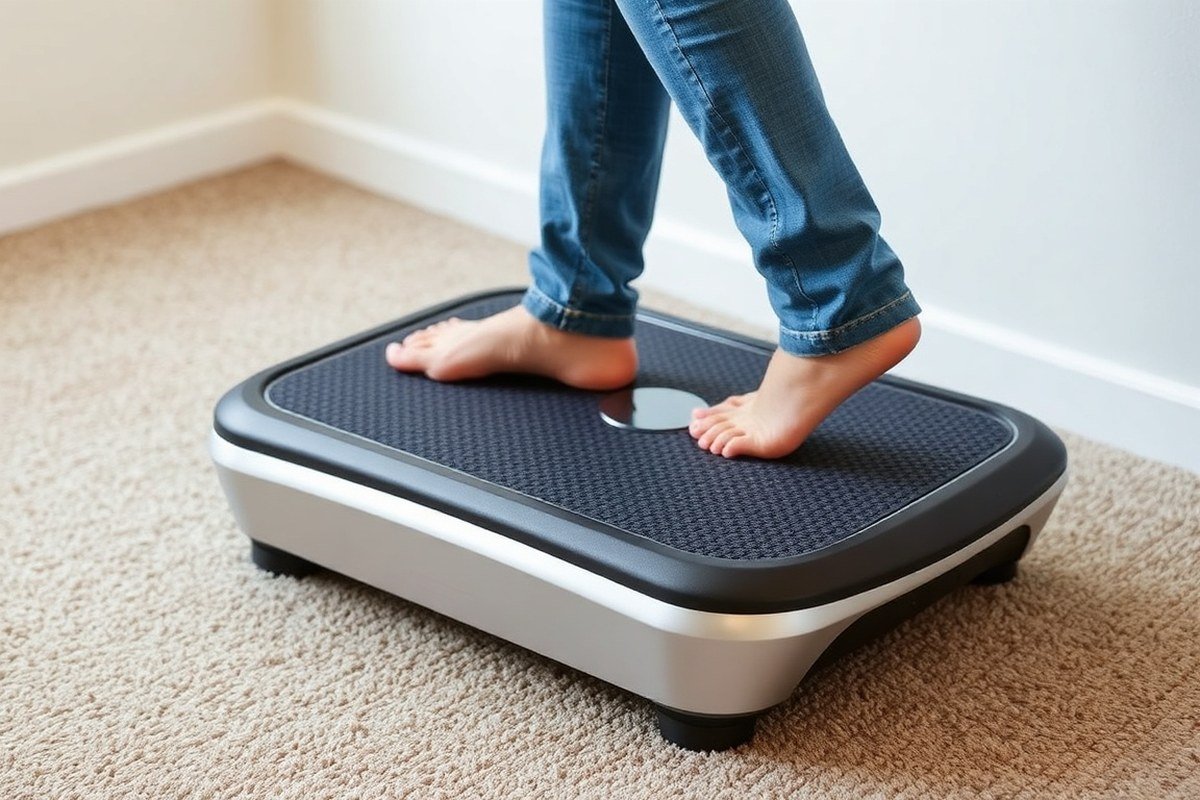
A vibration plate can work on carpet, but it’s not the best surface. Carpet changes how stable and effective the vibration plate is during exercises. Thick or soft carpets create uneven, cushioned support that might make the plate wobble or sink, raising the chance of losing your balance or getting hurt. Stability is important since a shaking plate lowers workout quality and could cause falls.
To use a vibration plate safely on carpet, choose a carpet with low pile and firm construction. Measuring carpet thickness is important, carpets thicker than half an inch tend to reduce stability noticeably. For example, a flat-weave carpet or a low-pile commercial carpet around 1/4 inch thick provides a firmer base than deep-pile rugs. Using a vibration plate on a thick plush carpet or loose rugs is not recommended unless your equipment’s manufacturer explicitly supports it.
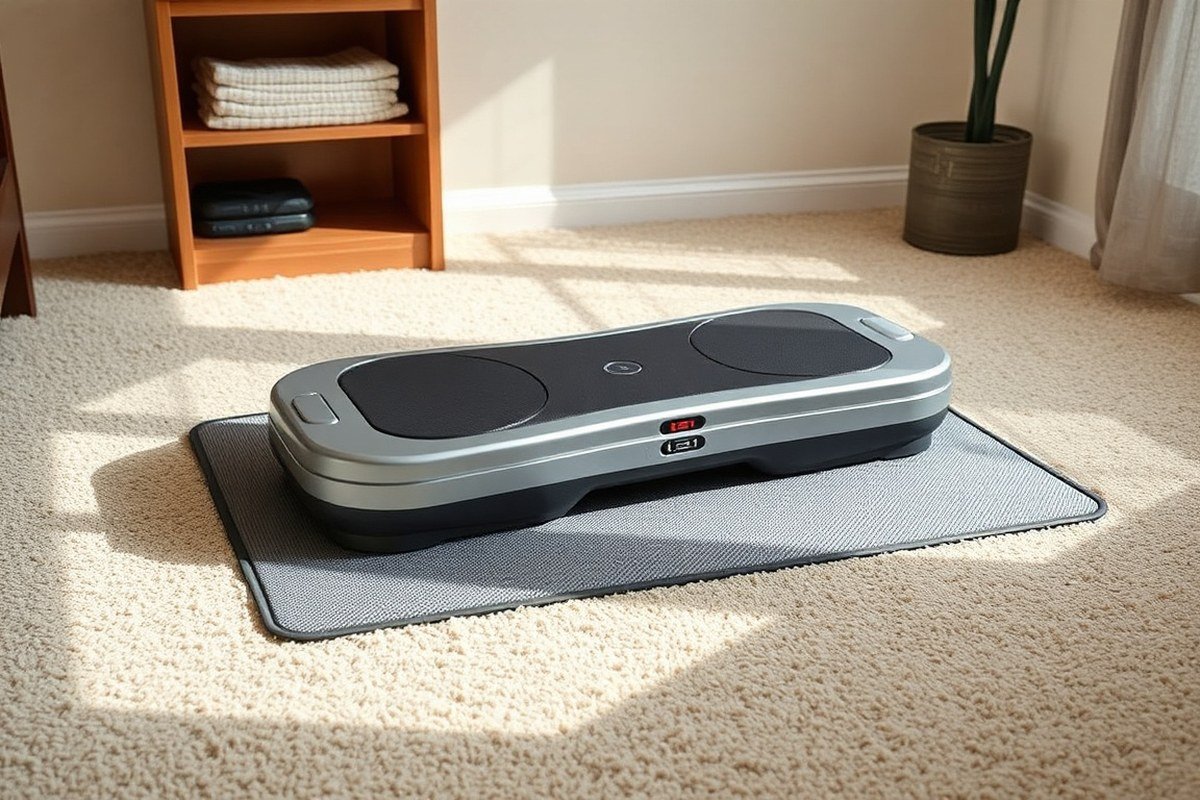
Adding a stable, dense mat or platform beneath the vibration plate improves safety and performance. Protective mats cost between $20 and $50 and prevent the plate from sinking into the carpet fibers or sliding during use. They also protect both the vibration plate’s feet and your flooring from damage. Placing the plate on a flat, solid base avoids movement and maximizes the vibration transfer needed for effective workouts.
Finally, ensure your balance by wearing lightweight sneakers with flexible soles while standing on the vibration plate on carpet. Test your setup before regular use by gently shifting your weight to check for wobbling or slipping. When the vibration plate feels unstable on your carpet, try placing it on a harder floor or set it on a firm base for better support. These precautions ensure your vibration plate operates safely and delivers optimal benefits on carpeted floors.
Which Carpet Types Are Suitable for Vibration Plates?
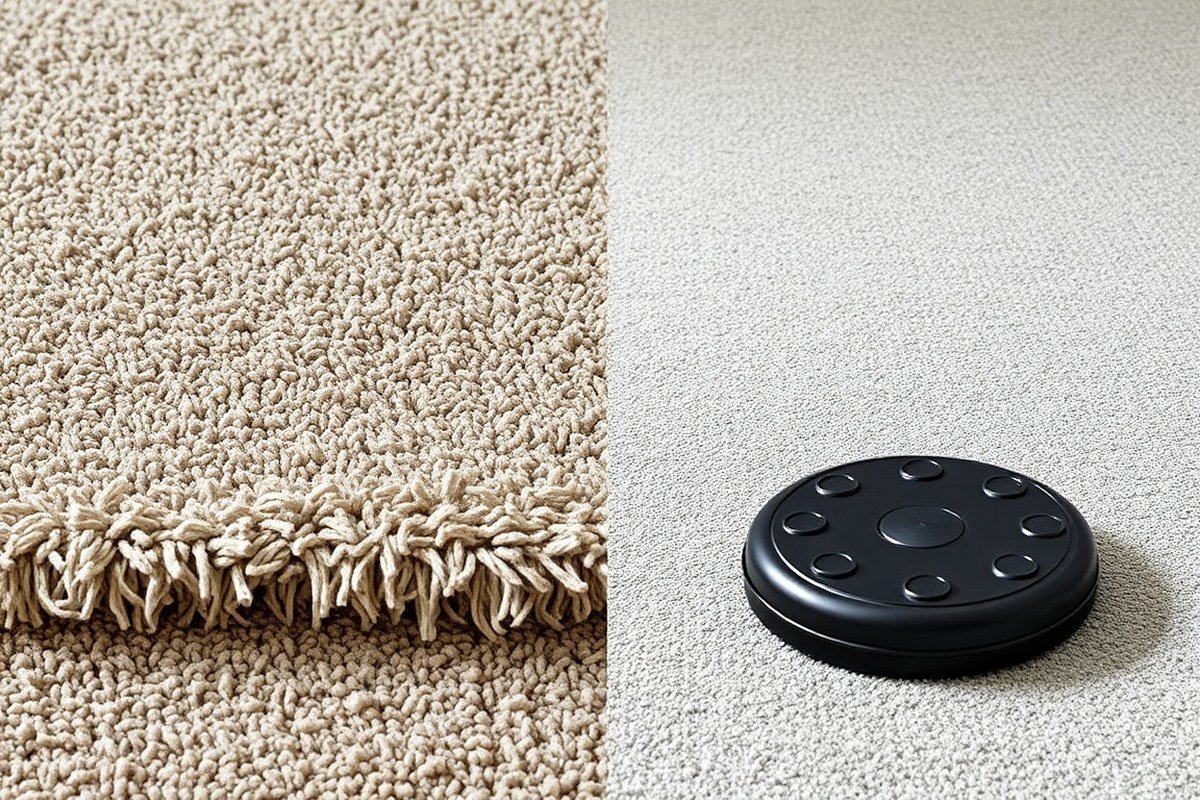
Carpet thickness and type directly influence how well your vibration plate performs and stays stable. Thin, low-pile carpets work best because they provide firm support and allow the plate’s vibration to transmit effectively without compromising level contact. Medium-pile carpets might work if you add a firm rubber mat underneath to improve stability and reduce uneven compression. Thick, plush, or shag carpet is generally unsuitable as it causes wobbling, reduces vibration intensity, and can increase motor wear due to uneven padding compression.
| Carpet Type | Suitability for Vibration Plate | What to Do |
|---|---|---|
| Low-pile / Commercial Carpet | Usually fine | Check that the machine sits level and all support points make firm contact |
| Medium-pile Carpet | Use with care | Place a firm rubber mat beneath the plate to improve stability |
| Thick, Shag, or Plush Carpet | Not recommended | Use a hard board plus mat, or move the plate to a hard, flat floor surface |
Choosing a firm, low-pile carpet reduces surface compression, keeping the vibration plate level and secure. This reduces the risk of wobble and uneven wear on the machine’s motor. Thick carpets compress unevenly and absorb vibrations, which lowers workout effectiveness and can cause the motor to overheat over time. If you only have carpeted floors, opt for thin or low-pile carpets and consider adding a hard, flat layer beneath the plate to preserve stability and protect your investment.
How to Prepare Your Carpeted Area for Vibration Plate Use
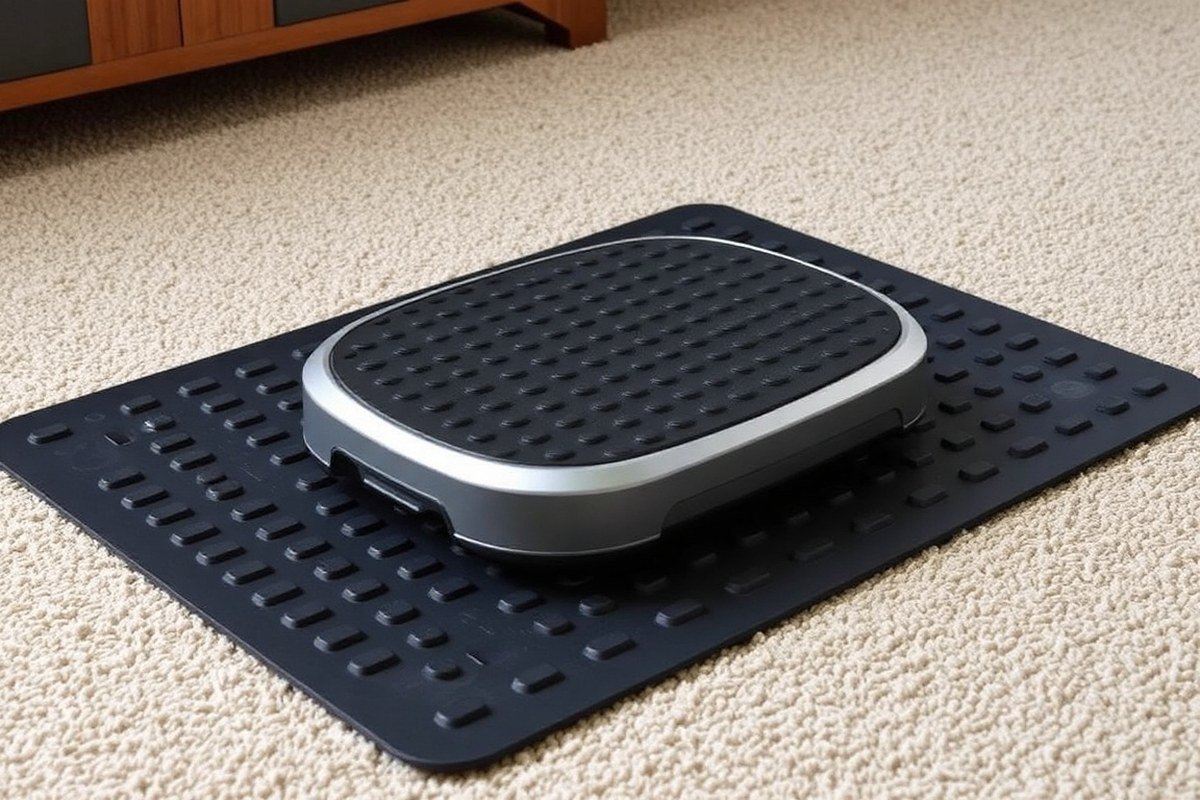
Preparing your carpeted area before setting up a vibration plate is key to safety and stability. Start by measuring and clearing at least 2 to 3 feet of space on all sides of the machine. This clearance reduces tripping hazards, lets the machine vibrate fully, and protects surrounding items from accidental impact. Remove rugs, furniture, or clutter to create an open workout zone.
Placing a Non-slip mat or a rigid board under the vibration plate helps stabilize it on carpeted floors. Mats designed for exercise equipment usually measure around 6 by 4 feet, which fits most vibration plates and gives extra room for standing or floor exercises. If your carpet is very thick or plush, a firm plywood board ½ to ¾ inch thick can provide a more solid surface. Lay the mat or board flat and check it doesn’t shift when the vibration plate is in motion. This extra step protects both the carpet fibers and the machine’s base from damage.
- Clear 2 to 3 feet around the vibration plate for safe movement and ventilation
- Use a 6′ x 4′ non-slip exercise mat or a sturdy ½-inch thick board under the machine
- Ensure the mat or board is flat with no wrinkles to prevent wobbling
- Check carpet thickness; move to thinner carpet or hard floor if machine feels unstable
- Tighten any loose screws or bolts on the vibration plate before use
- Keep the area free from small objects or cords that could cause imbalance or tripping
These steps stabilize your vibration plate, reducing unwanted movement. They also protect your carpet from premature wear caused by vibrations. Taking a few minutes to prepare your carpeted area can mean better workouts and a safer environment every time.
Testing Stability: How to Ensure Your Vibration Plate Won’t Wobble on Carpet
Start by placing your vibration plate on the carpet in the exact spot you plan to use it. Check that the base of the plate sits flat against the carpet without any gaps or tilting. Steady contact is essential to avoid wobbling during workouts, which can cause slipping or reduce the effectiveness of the vibration.
Next, perform a simple stability test. Gently press down on each corner of the vibration plate with your hands, feeling for any rocking or sinking into the carpet. Notice movement? The carpet might be too soft or thick to hold the plate securely. Using a firm, flat surface like a thin plywood board or a specialized exercise mat under the vibration plate often resolves this issue by distributing the weight evenly.
Once the vibration plate feels steady, stand on it with your feet shoulder-width apart and shift your weight forward, backward, and side to side. Watch and feel for any sliding or tilting. Wobbles? Change the location or put a non-slip mat beneath the plate on the carpet. Avoid thick plush carpets as they tend to cause more instability compared to low-pile or commercial-grade carpets.
- Place vibration plate on carpeted area you intend to use
- Press down on each corner to check for rocking or sinking
- Use a flat board or exercise mat under plate if wobbling occurs
- Stand on the plate, shifting weight to test stability
- Adjust position or add a non-slip mat if sliding is detected
- Prefer low-pile carpet over thick plush for better support
Monitoring for wobble helps protect your carpet from indentations or damage and preserves the plate’s base from strain. Taking these testing steps costs no more than your time and possibly a simple mat under $30, but they make using your vibration plate safer and more effective on carpeted floors.
Adjusting Vibration Plate Settings for Optimal Performance on Carpet
Carpet acts as a cushion under your vibration plate, which reduces the intensity of vibrations reaching your body. This cushioning absorbs some vibration energy, so the workout might feel less intense compared to using the plate on a hard, stable surface. To compensate for this, increase the frequency or amplitude settings. For example, if you normally train at 30 Hz with a 2 mm amplitude on a hard floor, try raising the frequency toward 35 or 40 Hz or increasing amplitude slightly if your machine allows it. This adjustment helps restore the vibration force your muscles receive.
The frequency controls how many times your vibration plate moves per second, so increasing it counters the softness of carpet padding. Start with a warm-up at a low frequency, around 20 to 25 Hz, even on carpet, for 3 to 5 minutes to prepare your muscles safely. Then gradually increase frequency in 5 Hz increments, monitoring how your body feels. Avoid quickly jumping to the highest settings, as carpet can make stability tricky and high-frequency vibrations could cause wobbling.
Not all vibration plates offer amplitude adjustments, but if yours does, raising amplitude can also help make up for lost vibration energy. A higher amplitude means the plate moves through a larger distance per vibration cycle, which often feels more intense despite the carpet’s absorption. Keep in mind this might put extra wear on both your carpet and equipment, so use moderate increases and watch for any unstable footing.
If your carpet is thick or plush, expect the vibration dampening to be stronger, so adjustments might need to be more significant. On thin or low-pile carpets, less modification is necessary. Tuning settings carefully lets you maintain an effective workout without pushing too hard, which minimizes risk of injury or equipment damage from instability on carpet.
Protecting Your Carpet and Equipment from Damage over Time
Using a vibration plate on carpet without precautions can cause carpet fibers to flatten, leave dents, or wear down the material. It can also lead to damage on the vibration plate’s base since carpet or padding may cause uneven support. To protect both your carpet and equipment, placing a firm, level base under the plate is essential. This base prevents sinking and spreading of pressure, which reduces long-term carpet wear and helps maintain the machine’s stability.
A large exercise mat or floor carpet underneath the vibration plate provides a buffer that adds friction and prevents the machine from drifting. However, keep in mind that working on soft or thick carpet may cause your vibration plate to work harder at maintaining vibration frequency, which could increase wear on its components over time.
- Use a sturdy plywood board or a commercial vibration platform mat as a firm base under the plate.
- Choose mats made of dense rubber or EVA foam around 0.25 to 0.5 inches thick to balance cushioning with support.
- Regularly rotate or move the vibration plate slightly to avoid creating permanent dents in one spot.
- Ensure the base is level and fully supports all feet of the plate to prevent wobbling.
- Avoid thick-pile or plush carpet areas that compress too much and destabilize the machine.
- Clean both the carpet surface and the plate base regularly to remove dust and debris that can accelerate wear.
- If possible, position the vibration plate on a low-pile carpet to reduce fiber flattening.
Costs vary based on solution: a plywood board might cost $15 to $30, while commercial mats can run $30 to $80 depending on size and thickness. You’ll know protection is working when the carpet retains its texture and the vibration plate remains stable without excessive noise or mechanical strain.
Safety Tips to Prevent Slipping, Movement, and Injury on Carpeted Surfaces
Using a vibration plate on carpeted floors can introduce slipping and wobbling risks, especially on plush or uneven carpet. Plates like the 4D Triple Motor type create multidirectional vibrations that may increase movement on less stable surfaces. This movement can lead to falls or injuries if not properly managed. Practicing safety is essential for stable workouts and protecting your equipment. To prevent slipping and maintain stability during use, follow this checklist of safety tips tailored for carpeted areas:
- Place the vibration plate on low-pile, flat carpet to reduce wobbling.
- Use a sturdy anti-slip mat underneath the plate for extra grip.
- Ensure the plate’s feet or pads fully contact the carpet without sinking.
- Start with lower vibration settings to test movement before increasing intensity.
- Wear shoes with firm soles that provide traction on carpet.
- Position yourself carefully on the plate to maintain balance throughout exercises.
- Keep a stable object nearby for support during poses that challenge your balance.
Applying these precautions helps reduce fall risk by limiting unwanted movement. Lower vibration settings at first let you gauge stability without sudden shifts. A non-slip surface or mat may cost between $10 and $30 but significantly improves grip and plate steadiness. Maintaining firm footing with appropriate footwear also helps prevent accidents. Avoid exercising on deeply textured or plush carpet, as this increases wobbling risk even with safety measures in place.
Maintenance and Cleaning After Using a Vibration Plate on Carpet
Cleaning your vibration plate after using it on carpet should happen at least once a week or more often if you notice dust or carpet fibers accumulating. Carpet fibers and dust can get lodged in vents or under the platform, which may affect the machine’s performance or cause overheating. Dirt buildup also shortens the lifespan of your equipment. Use a soft, dry cloth or a vacuum with a brush attachment to clear debris from all external surfaces and vents.
Inspect the carpet beneath and around your vibration plate regularly for signs of wear, compression, or damage. This helps prevent long-term carpet issues that might affect the stability of your vibration plate. Consider moving the device slightly or rotating its position periodically to avoid creating permanent indentations or compacted spots. The cost of repairing carpet or replacing padding can exceed the maintenance efforts by a large margin.
- Unplug the vibration plate before cleaning to avoid electrical hazards.
- Wipe the surface gently with a damp cloth and mild soap; do not use harsh cleaners.
- Vacuum underneath the vibration plate and the surrounding carpet area weekly.
- Check manufacturer guidelines about carpet use and warranty terms, as some restrict usage to hard floors.
- Keep the ventilation grilles free from blockage to prevent overheating.
- Rotate the vibration plate’s position every 1, 2 weeks to reduce carpet indentations.
- Perform routine maintenance such as tightening screws as recommended in your user manual.
Carpet use can affect warranty coverage if the manufacturer’s instructions specify avoiding soft surfaces. Review those details carefully to avoid voiding your warranty. Some brands advise additional maintenance when the device operates on carpeted floors, such as more frequent cleaning or inspections. Overall, balancing routine cleaning and carpet inspection with proper equipment care mitigates risks and extends product life.
Step-by-Step Action Plan for Using a Vibration Plate on Carpet
Follow these steps to safely and effectively use your vibration plate on carpet while minimizing risks and protecting your equipment.
- Before You Start: Inspect the carpet type to ensure it is low-pile and firm. You’ll know it’s suitable if your fingers don’t sink deeply when pressing down.
- Day 1: Place a vibration plate mat or a plywood board under your vibration plate. Check for any noticeable wobble or instability before use.
- Week 1: Begin with low vibration settings to test how the carpet affects performance. Monitor if the plate feels stable and the vibrations feel consistent.
- After 2 Weeks: Adjust settings based on your stability assessment, increasing intensity gradually if there is no slipping or movement.
- Ongoing: Use non-slip pads or furniture grippers under the vibration plate feet if you notice any shifting during workouts.
- Monthly: Inspect the carpet and vibration plate base for signs of wear or indentation damage. Address problems early to avoid long-term harm.
- After Every Session: Clean the vibration plate surface and the surrounding carpet area to prevent dirt buildup and maintain good hygiene.
- Before Upgrading: If you change carpet types or placement, repeat the stability and performance checks before resuming full workouts.
Frequently Asked Questions
Can a Vibration Plate Be Used on Carpet?
Yes, a vibration plate can be used on carpet, but you need to check that your carpet is low-pile or flat-weave and that the machine remains stable during use to avoid wobbling and damage.
What Does 10 Minutes on a Vibration Plate Equal in Terms of Exercise?
Ten minutes on a vibration plate can roughly mimic some benefits of light aerobic exercise, but it should not replace regular workouts; consistency and intensity matter much more.
When Should You Not Use a Vibration Plate?
Avoid using a vibration plate if you have certain health conditions like heart problems, pregnancy, or recent surgeries; always follow manufacturer guidelines and consult a healthcare provider for safety.
Will I Lose Weight If I Use a Vibration Plate Every Day?
Using a vibration plate daily alone is unlikely to cause significant weight loss; it works best as a supplement to diet and regular exercise.
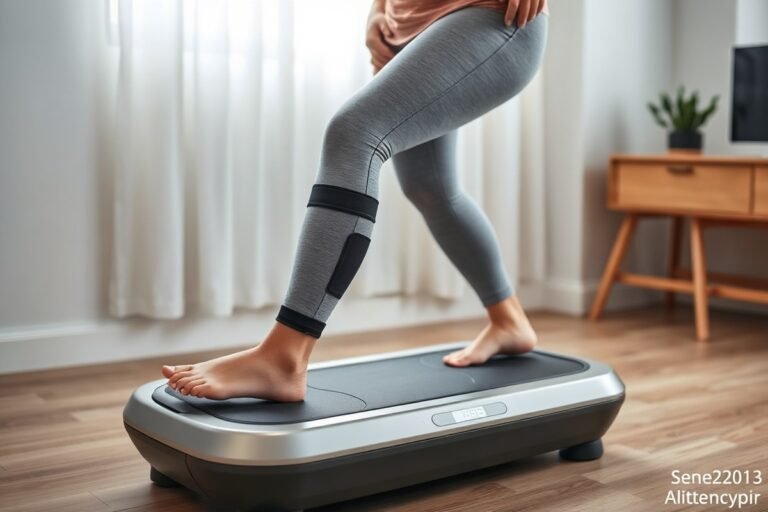
Can I Go Barefoot on a Vibration Plate?
You can go barefoot on a vibration plate, but make sure the surface is clean, and your feet are dry to avoid slipping or discomfort.
The Bottom Line
You can use a vibration plate on carpet safely by choosing the right carpet type, preparing the area, and monitoring stability during use. Taking time to set up properly protects both your equipment and carpet while helping you get the most from your workouts. Start by testing stability with a mat or board today and adjust from there to ensure consistent performance and safety.