Are Curved Treadmills Better? Benefits, Costs, and Workout Tips
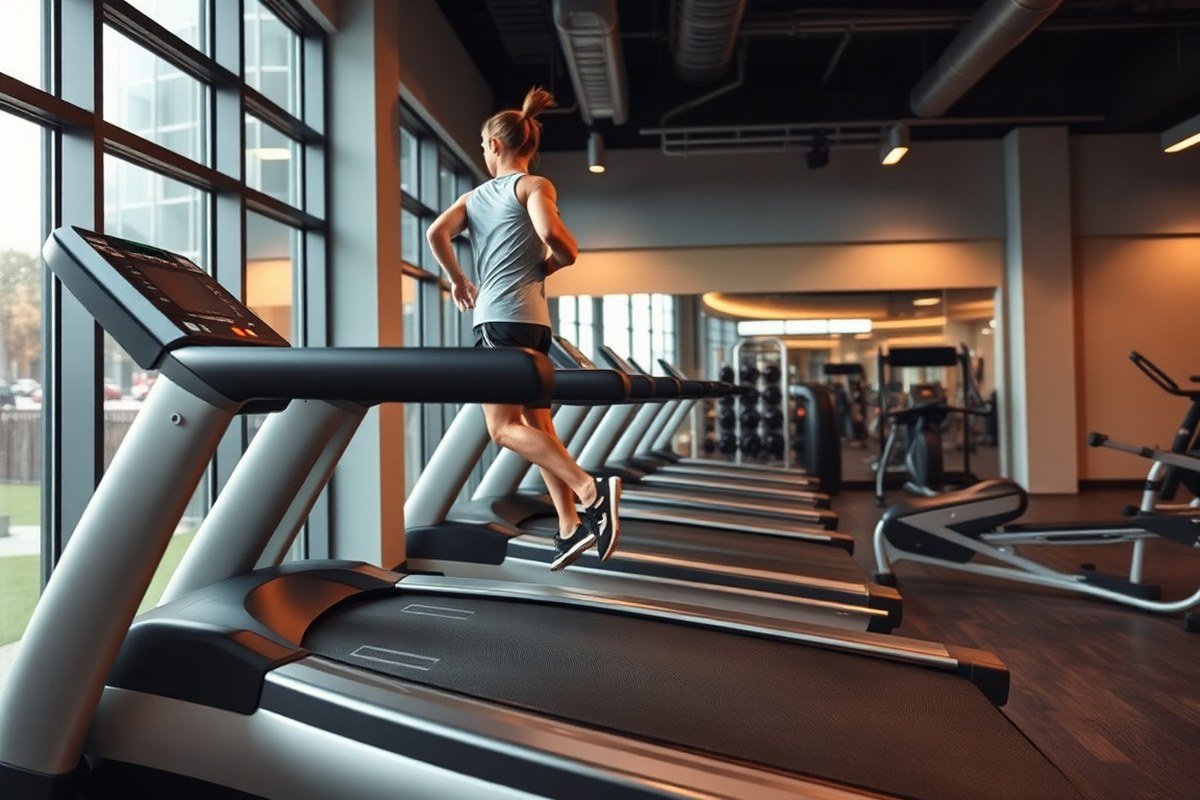
Are curved treadmills better depends on your running goals and workout style. They generally offer more muscle activation and calorie burn than flat treadmills. Their design reduces joint impact, which can help prevent injury. To benefit most, start with shorter sessions to adjust your stride to the curved surface.
Key Takeaways
- Curved treadmills can increase calorie burn by about 30% compared to motorized treadmills.
- Users experience 18, 22% more hamstring activation at matched running speeds on curved models.
- The curved design cuts joint stress up to 40% by catching the foot earlier in the stride.
- Most curved treadmills cost between $2,500 and $5,000, often $2,000 to $4,000 more than flat models.
- High-end curved treadmills can support up to 700 pounds walking and 450 pounds running.
- Adjust your running technique by gradually increasing session duration to adapt to the curved belt.
Are Curved Treadmills Better for Running Performance?
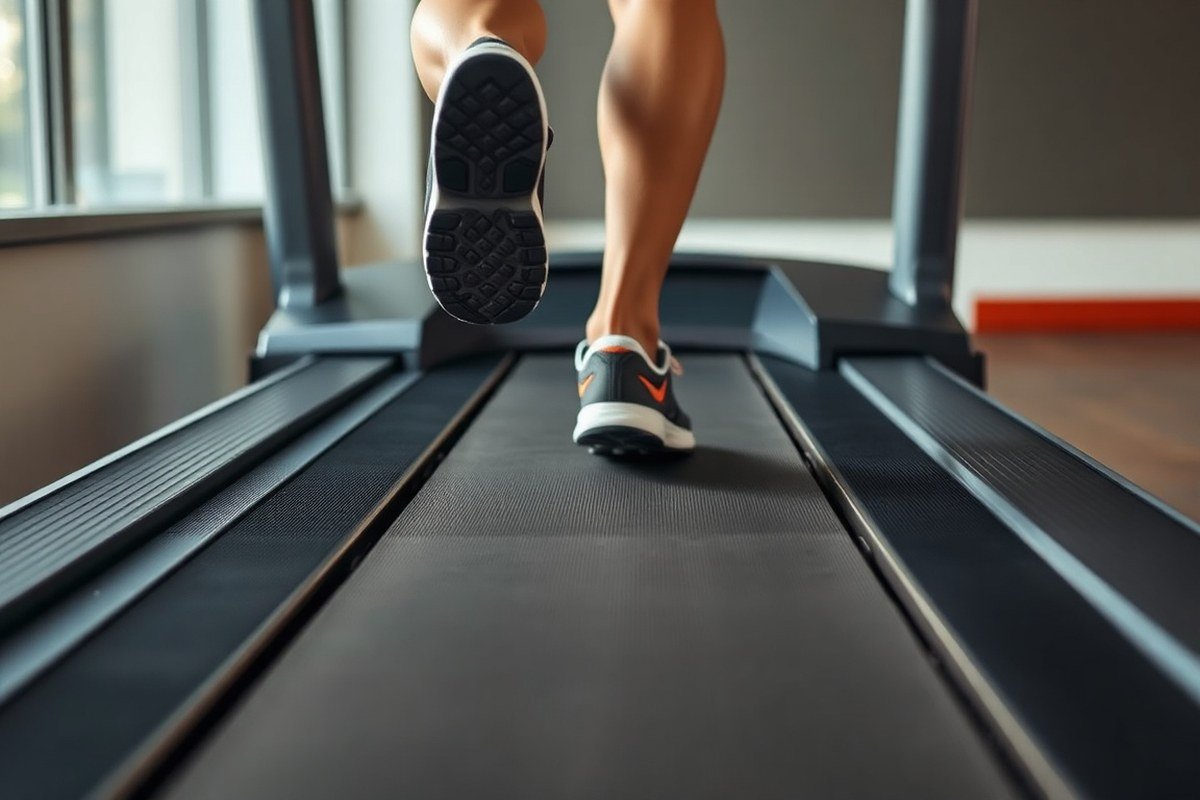
Curved treadmills offer distinct advantages for running performance, largely because they demand more effort from the user compared to traditional flat treadmills. Studies show runners on curved treadmills experience a higher oxygen uptake and improve heart rates, indicating a more intense workout. This is due in part to the treadmill being self-powered, which requires you to control the speed directly with your own effort, leading to 30-44% higher calorie burn compared to motorized treadmills.
The design also promotes better running form by encouraging a natural gait and reducing overstriding, which often leads to improved stride efficiency within 4 to 6 weeks of consistent training. One study involving electromyography (EMG) found muscle activation in the hamstrings increased by 18, 22% on curved treadmills while maintaining the same running speed, supporting the claim that curved surfaces recruit more muscles.
These performance benefits are notable for runners focused on shorter distances, such as 5K to half-marathon events. Improved running economy through biomechanical correction can directly boost race times by improving efficiency and reducing injury risks due to better joint impact management, curved treadmills can lower impact forces by up to 40%. However, the increased effort and muscle demand mean curved treadmills may not benefit every runner equally. Beginners or those with existing joint problems should approach cautiously and consider gradual adaptation.
Investing in a curved treadmill comes with a higher upfront cost, typically ranging from $1,500 to $7,000, but eliminates ongoing electricity costs since the tread belt is powered solely by your movement. This makes curved treadmills particularly attractive for high-intensity interval training, where immediate speed control and muscle engagement are critical. Flat treadmills, with their motorized belts and consistent speed settings, remain practical for steady-state running and those prioritizing convenience or lower initial expenses.
How Do Curved Treadmills Work Compared to Regular Treadmills?
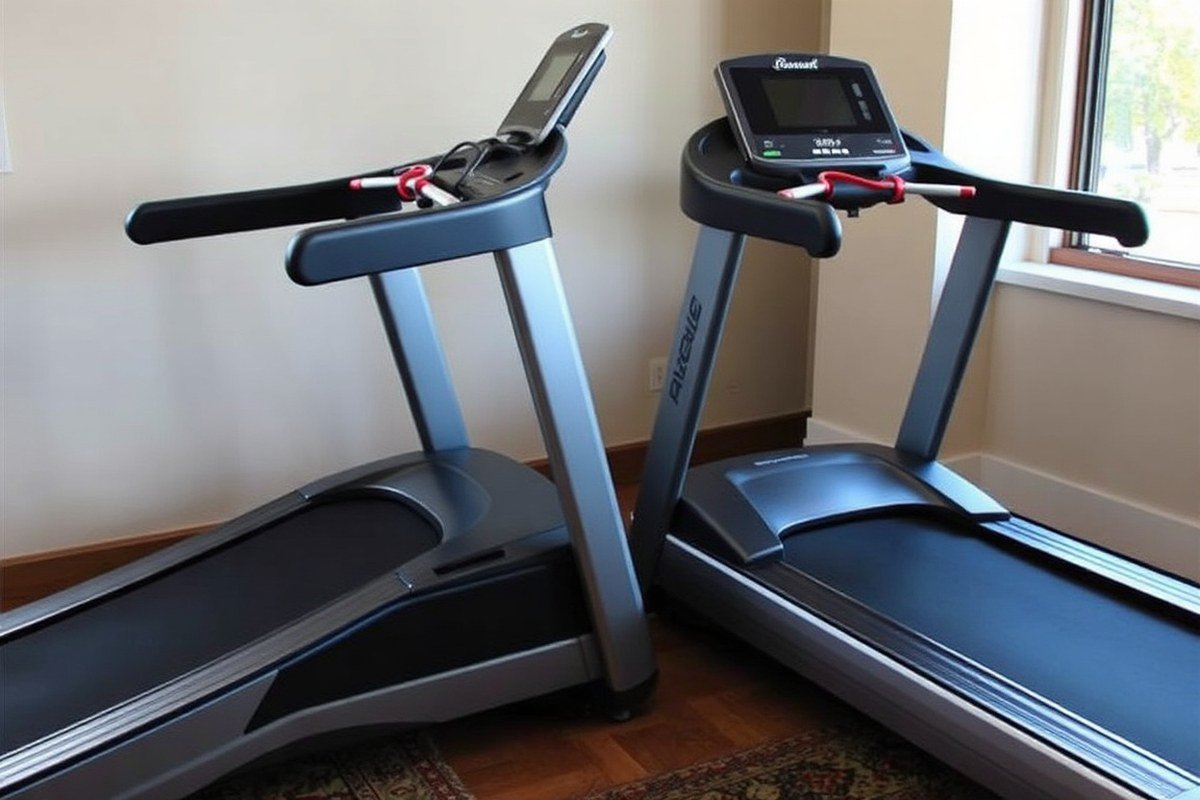
Curved treadmills feature a concave running surface made of flexible slats, unlike the flat belt on motorized treadmills. This shape creates a self-powered system where your stride moves the belt instead of a motor. As you lean forward and push with the balls of your feet, you propel the belt backward. This design makes pacing entirely dependent on your effort and positioning rather than buttons or preset speeds. Without a motor driving the belt, You control your speed naturally, which demands more consistent and engaged running mechanics.
Running on a curved belt changes your stride and muscle activation. This setup encourages a midfoot or forefoot strike and reduces your ground contact time, requiring quicker turnover. Because you must generate the motion, muscles in your calves, hamstrings, glutes, and core activate more intensely to maintain momentum. Lab studies show Your metabolic output rises by 10% to 30% compared to running at the same speed on a motorized treadmill. The core engages heavily to stabilize posture, supporting the forward lean that drives the belt movement.
Using a curved treadmill effectively means consciously pushing off with the front foot and leaning slightly forward to maintain smooth, controlled pacing. Walking or running too far back on the curve slows the belt and disrupts rhythm, while staying close to the curve’s apex provides the most efficient motion and muscle activation. The curved shape also helps reduce joint stress by catching your foot earlier in your stride, Lowering impact forces by up to 40%. Expect workouts to feel harder and engage more muscles while remaining low impact, which can improve endurance and running form with consistent use. Most models support a wide range of weights, up to 350 pounds or more, accommodating varied runners without the need for electric power.
Benefits and Limitations of Curved Treadmills for Different Users
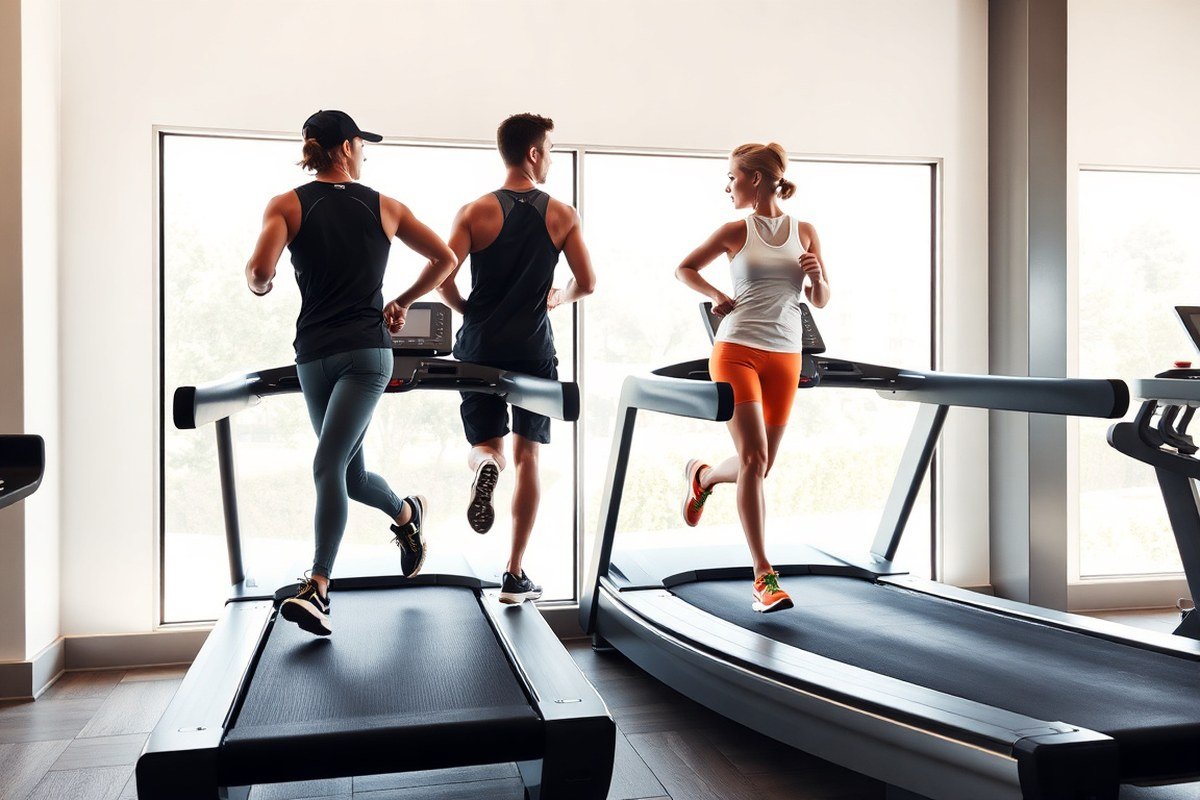
Curved treadmills reduce joint stress through their design, which encourages a forefoot strike and forward lean. This running form lessens impact on knees and hips compared to the heel-first landing common on flat treadmills. Such engagement of the posterior chain supports joint health by distributing forces more efficiently. For example, runners shifting to curved models often report less joint pain during and after workouts.
They excel at high-intensity interval training (HIIT) and sprinting. Their instant speed response means you can accelerate or decelerate without waiting for motors to catch up. This makes curved treadmills ideal for fast bursts and repeated sprints, with research suggesting a 10, 34% increase in calorie burn versus motorized treadmills. However, fewer pre-set workout programs might limit variety for users who prefer guided sessions.
Beginners face challenges with usability. The self-powered, curved belt demands stronger coordination and balance, which can feel unfamiliar or fatiguing at first. Training sessions that start with low speeds and short intervals help users build confidence without overload. Without a motor, adjusting speed requires more conscious effort, potentially causing frustration for novice runners.
Cost and warranty also influence suitability. Most curved treadmills fall between $2,500 and $8,000, with models like the Assault Air Runner around $4,000 offering quality for HIIT-focused runners. However, warranties tend to be shorter than those for traditional treadmills; some top models provide only a 1-year warranty. That is a tradeoff to consider when deciding if the benefits outweigh potential repair costs.
Use this checklist to weigh if a curved treadmill fits your fitness needs: Are you interested in sprint or HIIT training? Do you want to improve joint safety and running form? Do you feel comfortable with a steeper learning curve and ready to spend more upfront? Can you accept a shorter warranty period? When the answer is yes, a curved treadmill may provide strong advantages for your training goals.
How to Adapt Your Running Technique for Curved Treadmills
Adjusting to a curved treadmill usually takes about one to two weeks of consistent use, depending on your running experience. Since the treadmill’s belt moves by your own effort rather than a motor, pacing yourself requires you to control each stride with more intention. Start by jogging lightly to get a feel for the belt’s movement before scaling up to your usual running speed. You’ll want to stand up straighter and shorten your stride initially, adopting a midfoot landing to maintain balance.
Effective pacing means gradually increasing your effort instead of relying on a set speed display. Without motor assist, you must power the belt with every foot strike, which helps prevent you from overstriding or leaning forward excessively. Use your upper body posture to stay centered over the treadmill and avoid leaning too far back or forward, which can cause wobbling or slipping.
Common mistakes that runners make include overstriding, leaning too far forward, locking the knees, and failing to maintain a steady cadence. These errors increase injury risk and reduce the benefits of running on this equipment. Try the following adjustments to fix form issues:
- Keep your shoulders relaxed and back straight to avoid leaning forward.
- Decrease your stride length so your foot lands roughly below your hips.
- Engage your core to stabilize your posture and prevent rocking side to side.
- Use a quick, light foot turnover (cadence) to keep the belt moving smoothly.
- Avoid heel striking by focusing on a midfoot or forefoot landing.
- Start with 5 to 10 minutes per session, building up as you grow comfortable.
- Wear supportive running shoes with good grip to prevent slips.
Beginners should expect initial muscle soreness, especially in calves, as this treadmill demands more active propulsion. Experienced runners can vary cadence and stride length to tailor workouts such as sprints or hill simulations. Staying patient with progress and focusing on posture will help you maximize the treadmill’s benefits while reducing injury risk.
Choosing the Right Curved Treadmill: Key Features and Models Compared
Choosing a curved treadmill depends a lot on your budget, space, weight, and running needs. Quality curved treadmills generally start around $1,500. Less expensive models under $1,000 might have limits in size and weight capacity, which matter if you’re taller or heavier than average. A treadmill with insufficient capacity can wear out quickly or feel unstable. Here’s a comparison of popular curved treadmills to help you decide based on price, weight limits, footprint, and user suitability:
| Model | Type | Price | Weight Capacity | Best For | Amazon Available |
|---|---|---|---|---|---|
| IN10CT Health Runner | Curved | $1,895 | 400 lbs | Serious athletes | ✅ |
| ERGOLIFE Curved | Curved | $899 | 265 lbs | Small spaces | ✅ |
| Sunny SF-X7100 | Curved | $1,799 | 375 lbs | Value seekers | ✅ |
| Sunny Premium | Curved | ~$1,500-$2,000 | 375 lbs | Quality & budget balance | ✅ |
Weight capacity is key. For example, runners over 265 pounds should choose models like the IN10CT Health Runner or Sunny SF-X7100 for safety and durability. The footprint matters too; the ERGOLIFE’s smaller size suits tight home gyms but limits weight. The heaviest model, the IN10CT, offers more stability but might be harder to move. Longevity relates to warranty and build. High-end curved treadmills like Woodway offer strong warranties but cost significantly more than $3,000.
To pick the right treadmill, check your weight against the model’s limit, consider your space, and decide how much you can invest without compromising key features like durability and user comfort. A reliable warranty and good user reviews provide added peace of mind.
Your First 2 Weeks on a Curved Treadmill: Quick-Start Plan
Follow this plan to ease into running on a curved treadmill and assess if it improves your performance and enjoyment.
- Day 1: Start with a 5-minute walk to get comfortable with the curved surface. You should feel balanced and steady before increasing intensity.
- Day 2-3: Run at a relaxed pace for 10 minutes focusing on a short, quick stride. You’ll know it works if your breathing stays steady without tripping or slipping.
- Day 4-6: Increase running time to 15 minutes and experiment with slightly faster speeds by increasing your leg turnover. Notice if you feel more engagement in your glutes and hamstrings.
- Day 7: Add intervals of 30 seconds hard effort followed by 90 seconds easy running over 12 minutes. Check for improved recovery compared to your usual treadmill sessions.
- Week 2 Day 8-10: Incorporate a 20-minute run at moderate pace focusing on maintaining proper posture and foot strike. Success means less fatigue and stability throughout.
- Week 2 Day 11-12: Try hill sprints using the curved treadmill by driving your knees up and leaning slightly forward. Feeling stronger push-off and increased heart rate confirms effectiveness.
- Week 2 Day 13-14: Run a simulated race pace for 10 minutes. If you feel more in control and less impact on your joints, your adaptation is progressing well.
Frequently Asked Questions
Are Curved Treadmills More Durable Than Regular Treadmills?
Curved treadmills often have fewer mechanical parts, which can make them more durable. However, durability depends on the brand and model, so consider warranty length and customer reviews before buying.
Do Curved Treadmills Require Special Maintenance?
Curved treadmills usually need less maintenance than motorized ones but still require cleaning and belt checks. Regular upkeep ensures smooth operation and longevity.
Can Curved Treadmills Help with Weight Loss More Effectively?
Curved treadmills may burn more calories by encouraging higher intensity runs. This increased effort can aid weight loss when combined with a balanced diet.
Is It Harder to Learn Running on a Curved Treadmill?
Running on a curved treadmill can take some getting used to due to the different form and pacing. Start slowly to adapt your technique comfortably.
Are Curved Treadmills Suitable for Elderly Users?
Curved treadmills might be challenging for older adults due to balance and coordination needs. Consider models with handrails or consult a healthcare provider first.
Key Points to Remember
Curved treadmills can offer meaningful benefits in running form and muscle activation, but they require proper technique and gradual adaptation. Try incorporating short sessions into your routine to see how your body responds. Your next step is to choose a model with adjustable curve settings to tailor the intensity as you build confidence and strength.